UGC Creator vs Tiktok Creator: Which Should You Start?
Honest head-to-head: UGC Creator vs Tiktok Creator. Startup cost, scalability, time to revenue, and who each one suits.
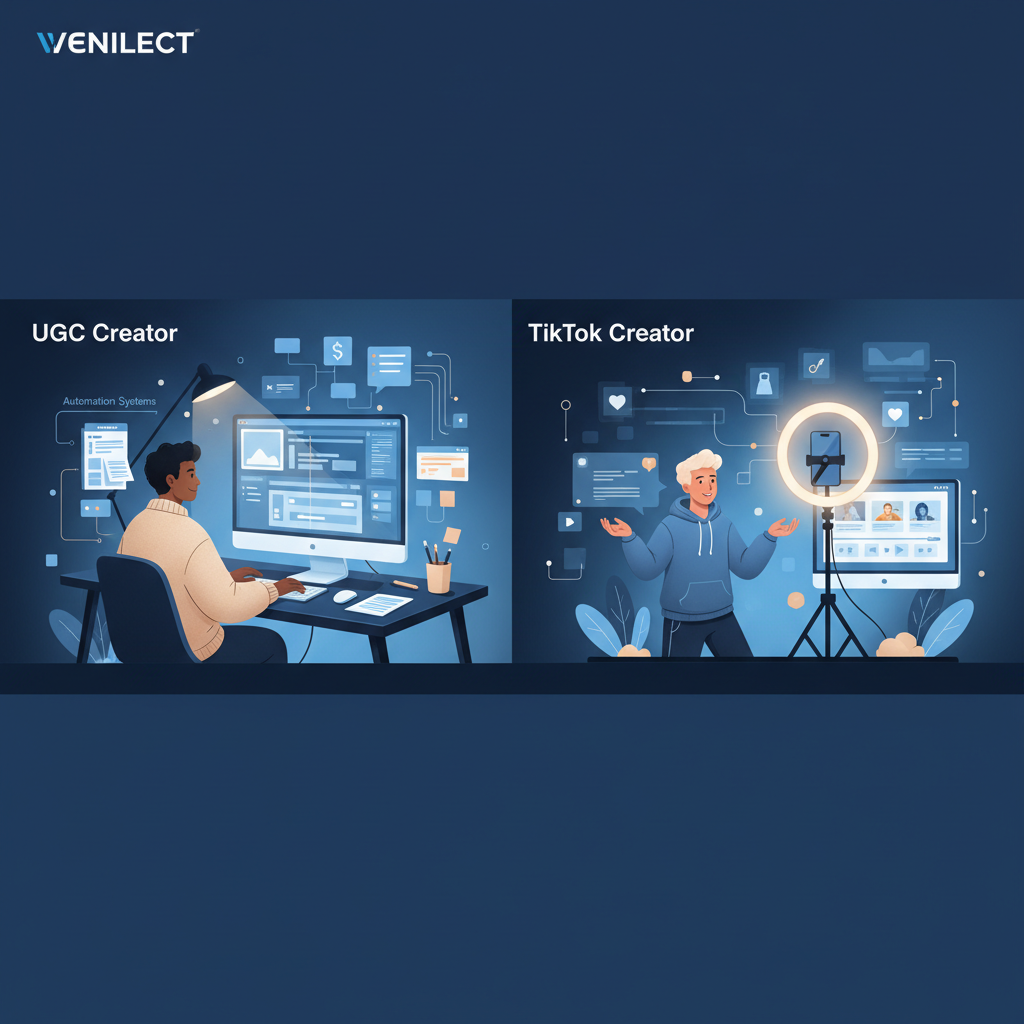
UGC Creator vs Tiktok Creator: Which Should You Start in 2026?
Both UGC Creator and Tiktok Creator show up on most 'best online business' lists, but they reward very different operators. This head-to-head compares them on startup cost, time to first revenue, weekly hours, scalability, passive income potential, and the kind of person each one suits — then gives a clear recommendation.
For live, data-driven scores and a side-by-side metric breakdown, use the UGC Creator vs Tiktok Creator comparison engine. This article is the qualitative companion.
At-a-glance
- UGC Creator: see the full UGC Creator profile for scores, pros, cons, and startup requirements.
- Tiktok Creator: see the full Tiktok Creator profile for scores, pros, cons, and startup requirements.
Startup cost
UGC Creator and Tiktok Creator differ meaningfully on capital required. UGC Creator typically needs investment in tooling and (depending on the model) ads or inventory, while Tiktok Creator tends to front-load either skill development or audience building. Neither requires venture capital, but they have different cash-burn profiles in the first 90 days. The opportunity profiles linked above include exact cost ranges.
Time to first revenue
UGC Creator tends to reach first revenue faster when you already have a clear ICP and can run manual outreach; Tiktok Creator usually has a longer ramp because it relies on compounding distribution. If you need money this quarter, the faster-revenue model is the safer pick. If you can wait two quarters for compounding, the second one often produces a bigger ceiling.
Weekly hours and operating load
UGC Creator is operationally lighter once systemized but can require burst hours during client delivery or launch windows. Tiktok Creator is more evenly demanding week-to-week, which suits operators who prefer rhythm over spikes. Neither is genuinely passive in year one.
Practical Examples and Real-Life Scenarios
Becoming a UGC Creator typically involves managing multiple client projects that may include tasks such as content brainstorming, video filming, editing, and collaboration with brands. For instance, creators might spend 5 to 15 hours in a particular week solely focused on getting ahead for several clients simultaneously or working through a launch campaign that requires immediate attention and delivery within a short turnaround time.
Conversely, a Tiktok Creator often engages in ongoing content creation that involves consistent posting schedules. This might seem less demanding daily because it allows for a more predictable structure, yet it requires continuous engagement with the platform, audience interaction, and trend adaptation. For example, a successful TikTok creator could work around 20–30 hours a week to keep up with account activity, trends, and audience engagement while also scripting and shooting videos.
Tools and Cost Considerations
Both UGC and TikTok creators will need foundational tools for creating high-quality content. For UGC Creators, investing in tools like Canva for design, Adobe Premiere Pro for editing, or Trello for project management can optimize workflow and efficiency. The cost of these tools can range from free to a few hundred dollars annually, depending on the complexity and usage.
On the other hand, a TikTok Creator might focus on acquiring quality cameras, microphones, and lighting equipment to stand out on the platform. These one-time equipment costs could range upwards of $500, depending on the quality and brand, in addition to any subscriptions to editing software.
Expectations and Beginner Mistakes
A critical consideration is the learning curve associated with each path. UGC Creators often struggle with underestimating the time needed to build relationships and secure clientele, leading to periods of intense work. Beginners may overcommit, thinking they can handle multiple clients at once without proper systems in place, causing stress and potential burnout.
TikTok Creators, however, may face challenges like maintaining regular video output and staying relevant as trends shift rapidly. Mistaking virality for sustained growth is a common misstep—while a single viral video may boost popularity temporarily, consistent quality content is what builds a loyal audience over time. Newcomers might also misjudge the ongoing need for creativity and adaptability, essential to stay in tune with the platform's dynamic nature.
Experienced creators can balance workload by creating batch content during more inspiring or less busy weeks and using analytics tools to strategically plan future content based on what resonates well with their audiences. These strategies help manage time more effectively and sustain creative enthusiasm without sacrificing quality.
Scalability
Tiktok Creator generally scales further without proportional time investment, especially with productization. UGC Creator can scale with hires or systems, but the ceiling depends heavily on niche selection and channel maturity. Use the comparison engine for the exact scalability scores side-by-side.
Practical Examples
To understand scalability better, let's consider a Tiktok creator who leverages viral content. This creator can post a video that gains millions of views overnight, garnering thousands of new followers. This organic growth allows for greater monetization opportunities like brand deals, merchandise sales, or even launching a digital product without increasing the time spent on content creation. Productization plays a significant role here, as it enables creators to scale their efforts through passive income streams such as online courses or digital downloads.
In contrast, a UGC creator primarily focuses on creating content for brands that need user-generated content. While it's possible to take on more clients or projects, the workload can increase rapidly. For instance, handling ten client projects might require additional team members or subcontractors, significantly affecting costs and management complexity.
Costs and Investment
Scalability also ties closely to upfront costs and ongoing investments. A Tiktok creator may initially invest in high-quality video equipment and editing software, but these are generally one-time purchases. As their channel grows, more investments might be made in marketing or professional development, such as taking coaching to improve engagement metrics.
For UGC creators, costs often include hiring extra hands for scripting, shooting, and editing videos to maintain quality as the workload scales. Investing in project management tools like Trello or Asana can help streamline operations. Both creators need to consider these elements when planning scalability.
Realistic Expectations and Beginner Mistakes
Scalability requires realistic expectations. A common beginner mistake is underestimating the amount of work required to scale efficiently. For Tiktok creators, expecting every video to go viral is unrealistic. Consistent engagement and nurturing community are essential for sustained growth.
Meanwhile, UGC creators might over-promise deliverables to clients, leading to burnout. Establishing clear contracts and understanding personal limits are crucial to avoid jeopardizing client relationships and the creator's health.
Passive income potential
Neither is truly passive, but Tiktok Creator usually compounds into a more passive shape after 18-24 months thanks to audience, content, or product flywheels. UGC Creator can also become semi-passive with strong delivery systems and senior team members, but it tends to require more active leadership.
Which is easier for beginners?
For most beginners reading this, the easier model is the one that matches your existing strengths. If you're comfortable with sales conversations and short feedback loops, start with UGC Creator. If you prefer to build in public and play a longer compounding game, start with Tiktok Creator.
Practical Examples and Tools
When starting as a UGC creator, focus on crafting content that resonates with specific brand requirements. Tools like Canva for graphic design or Descript for video editing can be invaluable for developing polished deliverables without needing advanced technical skills. On the other hand, TikTok creators might benefit from engaging with apps like InShot or CapCut, which provide user-friendly interfaces for video editing and adding effects that can enhance audience engagement.
Time Commitment and Costs
UGC creators will often work on a project basis, which can vary in terms of time commitment. Initial projects might take anywhere from a few hours to a couple of days, depending on the complexity and feedback cycle. Costs are generally low, often limited to subscription fees for editing tools or services used. Similarly, TikTok creators typically invest significant time in content creation aiming for virality, with an ongoing need to adapt to platform trends and audience preferences. This endeavor can require several hours each week dedicated to filming, editing, and community engagement.
Beginner Mistakes to Avoid
For UGC creators, a common mistake is overlooking the brand's voice and the specific brief, which can lead to unsatisfactory deliverables and missed opportunities. Always strive to communicate effectively with clients to better understand their vision. For TikTok creators, over-focusing on virality can lead them to neglect authentic engagement. Consistency and genuine interaction with the audience often yield more sustainable growth than occasional viral hits.
Decision Criteria
Before choosing between becoming a UGC creator or a TikTok creator, consider your interests and strengths. Do you enjoy creating specific content for brands, customizing your work for different clients, and having diverse projects? UGC creation may suit you. Alternatively, if you are drawn to building a personal brand and storytelling, managing a following, and engaging directly with an audience, the TikTok creator path could be more rewarding.
Both paths have unique advantages and challenges, making it essential to evaluate what aligns best with your personal goals and current skills. Acknowledging your time availability, financial resources, and eagerness to grow in the digital content landscape will help guide your decision.
Frequently Asked Questions
Is UGC Creator or Tiktok Creator better for beginners?
UGC Creator is usually easier to get to first revenue because the feedback loop is shorter, but Tiktok Creator often has a higher long-term ceiling. Beginners who need cash flow should start with UGC Creator; beginners who can self-fund 6+ months should consider Tiktok Creator.
Which scales better, UGC Creator or Tiktok Creator?
Tiktok Creator typically scales further without proportional time investment, especially with productization. UGC Creator scales with systems and hires but has a more service-heavy ceiling.
Which produces income faster?
UGC Creator tends to reach first revenue in 30-60 days with manual outreach. Tiktok Creator usually takes 3-6 months because it depends on compounding distribution.
Can I do both at the same time?
Not in the first 6 months. Splitting attention between two models almost always produces two stalled businesses. Pick one, ship for 90 days, then revisit.
Where can I see live scores side-by-side?
Use the UGC Creator vs Tiktok Creator comparison engine for live scores on startup cost, difficulty, scalability, and passive income potential.
How does content strategy differ between UGC and TikTok Creators?
UGC creators focus more on developing custom content pieces for brands, often aligning with marketing goals. This involves direct interaction with brands to produce tailored content. In contrast, TikTok creators focus on creating short, engaging videos aimed at capturing broad audience interest on the platform, relying heavily on personal branding and viral trends to grow their audience.
Who should choose UGC Creator
Pick UGC Creator if you want faster cash flow, prefer working directly with clients or customers, and are willing to do manual outreach in the first 60 days. It rewards operators who execute consistently on a narrow ICP and dislike the slowness of pure audience-building.
Who should choose Tiktok Creator
Pick Tiktok Creator if you can self-fund a longer ramp, enjoy compounding asset-style work (content, product, audience), and want a higher long-term ceiling with less per-deal effort. It rewards operators who can stay consistent for 6-12 months without immediate validation.
Final recommendation
If you're brand new and need momentum, start with UGC Creator. If you already have some runway and want the bigger asset, start with Tiktok Creator. Both are legitimate. Both have produced 6 and 7-figure operators. The mistake is starting both at once and shipping neither.
For a personalized recommendation weighted against your budget, time, and skill profile, take the VENILECT assessment — it ranks both of these (and 98 other opportunities) against your inputs.
Related comparisons
- Browse the full comparison engine
- UGC Creator profile
- Tiktok Creator profile
- Take the personalized assessment
Related Resources
TikTok Creator
Becoming a TikTok Creator presents an exciting path for aspiring content creators with a knack for engaging video content. Startup requirements range from $0 to $500, primarily spent on essential gear like a smartphone with a quality camera ($300–$800) and potentially budget-friendly lighting equipment ($20–$100). Beginners can find the entry level manageable, with a difficulty rating of 3 out of 5, meaning basic video editing skills and a sense for trending content are beneficial.
TikTok offers an attractive income range of $500 to $30,000 per month, depending on viewership and engagement. Time to first revenue typically spans 2 to 6 months, allowing creators to build a substantial following. This platform suits individuals with dynamic personalities and creativity, including creators keen on expressing themselves and building an audience. With its relatively simple startup requirements and moderate difficulty, TikTok is particularly advantageous for emerging creators looking to make their mark in the digital space.
Those who thrive in social environments and enjoy interacting with varied audiences will find this path rewarding. TikTok's diverse opportunities, from sponsored posts to collaboration deals, make it a viable option for those keen on social media-driven revenue.
Affiliate Marketing
Affiliate marketing is an excellent option for those exploring the content creation space, offering a mix of simplicity and potential profitability. Startup costs are minimal, typically ranging from $0 to $300. This may cover a domain name and hosting for a website—a common but not always necessary expense, especially if leveraging existing platforms.
Time to first revenue usually spans from 2 to 6 months, as building rapport and generating traffic to partner links takes time. Difficulty is moderate at a 3 out of 5, making it accessible for beginners armed with writing skills and a basic understanding of SEO. Income potential varies significantly, typically between $500 and $50,000+ per month.
Affiliate marketing particularly benefits writers, SEO learners, and operators patient enough to wait for growth. It's an ideal starting point for creators looking to develop strategic content, understand audience needs, and build income over time. For those interested, Affiliate Marketing provides further insights into this lucrative path.
TikTok Ads Agency
Exploring the TikTok Ads Agency Path
Venturing into a TikTok Ads Agency provides a compelling opportunity for creatives and marketers eager to capitalize on the platform's meteoric rise. Startup costs range from $500 to $2,500, covering expenses such as software tools, marketing, and initial client acquisition efforts. Considering the time to first revenue is typically 1 to 2 months, it’s relatively fast compared to other content creation models.
Difficulty is rated at 4 out of 5, necessitating advanced skills in digital marketing, data analysis, and creative ad development. This path is best suited for those who have a strong grasp of consumer behavior and social media trends. Individuals who thrive in dynamic environments and possess a knack for creative strategy will find this venture particularly rewarding.
The income potential ranges significantly from $8,000 to $120,000 per month, dependent on client volume and campaign success. Overall, a TikTok Ads Agency offers a lucrative, albeit challenging, avenue for highly-skilled professionals aiming to make a significant impact in the digital advertising space.
UGC Creator
A Deep Look at UGC Creation
Embarking on a journey as a UGC Creator offers a strategic entry into content creation with modest startup costs that typically range from $200 to $1,500. These expenses primarily cover essential tools and equipment, such as a decent camera or mobile phone, video editing software, and internet services. Given the low difficulty rating of 2 out of 5, this path is accessible for beginners, making it ideal for individuals honing their creative storytelling and acting skills.
Expect to see your first revenue within 2 to 6 weeks, as there is a strong demand for authentic and engaging user-generated content. Monthly earnings can range from $1,000 to $15,000, depending on the volume and quality of content produced. This opportunity is best suited for natural storytellers, amateur actors, and creators who relish the chance to engage directly with diverse audiences. By capitalizing on these skills, UGC Creators can build a sustainable and rewarding career while contributing authentic voices to the digital media landscape.
Frequently asked questions
Is UGC Creator or Tiktok Creator better for beginners?+
UGC Creator is usually easier to get to first revenue because the feedback loop is shorter, but Tiktok Creator often has a higher long-term ceiling. Beginners who need cash flow should start with UGC Creator; beginners who can self-fund 6+ months should consider Tiktok Creator.
Which scales better, UGC Creator or Tiktok Creator?+
Tiktok Creator typically scales further without proportional time investment, especially with productization. UGC Creator scales with systems and hires but has a more service-heavy ceiling.
Which produces income faster?+
UGC Creator tends to reach first revenue in 30-60 days with manual outreach. Tiktok Creator usually takes 3-6 months because it depends on compounding distribution.
Can I do both at the same time?+
Not in the first 6 months. Splitting attention between two models almost always produces two stalled businesses. Pick one, ship for 90 days, then revisit.
Where can I see live scores side-by-side?+
Use the [UGC Creator vs Tiktok Creator comparison engine](/compare/ugc-creator-vs-tiktok-creator) for live scores on startup cost, difficulty, scalability, and passive income potential.
How does content strategy differ between UGC and TikTok Creators?+
UGC creators focus more on developing custom content pieces for brands, often aligning with marketing goals. This involves direct interaction with brands to produce tailored content. In contrast, TikTok creators focus on creating short, engaging videos aimed at capturing broad audience interest on the platform, relying heavily on personal branding and viral trends to grow their audience.
Not sure which business is right for you?
Answer 7 quick questions and get personalized matches from 100+ opportunities.
Take the assessment