Micro SaaS vs Chrome Extension: Which Should You Start in 2026?
Honest head-to-head: Micro SaaS vs Chrome Extension. Startup cost, scalability, time to revenue, and who each one suits.
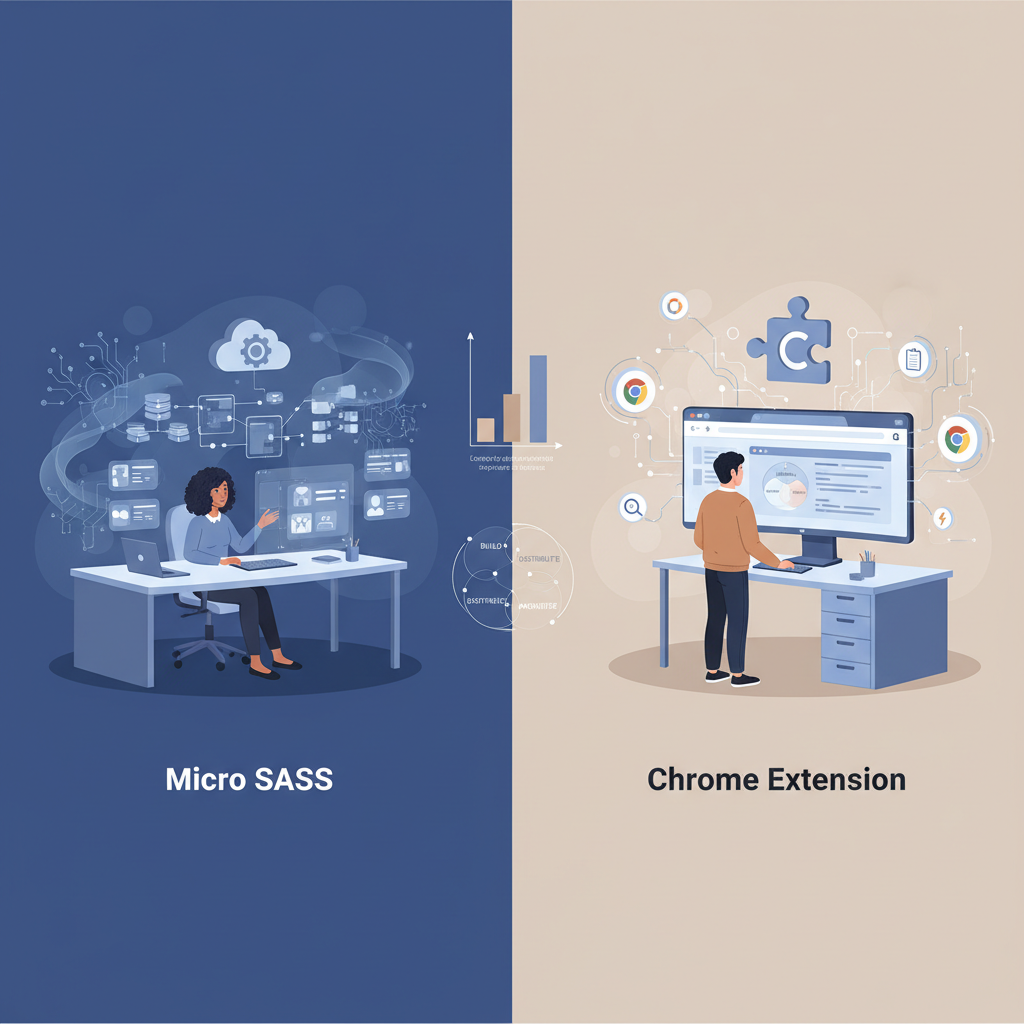
Micro SaaS vs Chrome Extension: Which Should You Start in 2026?
Both Micro SaaS and Chrome Extension show up on most 'best online business' lists, but they reward very different operators. This head-to-head compares them on startup cost, time to first revenue, weekly hours, scalability, passive income potential, and the kind of person each one suits — then gives a clear recommendation.
For live, data-driven scores and a side-by-side metric breakdown, use the Micro SaaS vs Chrome Extension comparison engine. This article is the qualitative companion.
At-a-glance
- Micro SaaS: see the full Micro SaaS profile for scores, pros, cons, and startup requirements.
- Chrome Extension: see the full Chrome Extension profile for scores, pros, cons, and startup requirements.
Startup cost
Micro SaaS and Chrome Extension differ meaningfully on capital required. Micro SaaS typically needs investment in tooling and (depending on the model) ads or inventory, while Chrome Extension tends to front-load either skill development or audience building. Neither requires venture capital, but they have different cash-burn profiles in the first 90 days. The opportunity profiles linked above include exact cost ranges.
Time to first revenue
Micro SaaS tends to reach first revenue faster when you already have a clear ICP and can run manual outreach; Chrome Extension usually has a longer ramp because it relies on compounding distribution. If you need money this quarter, the faster-revenue model is the safer pick. If you can wait two quarters for compounding, the second one often produces a bigger ceiling.
Weekly hours and operating load
Micro SaaS is operationally lighter once systemized but can require burst hours during client delivery or launch windows. Chrome Extension is more evenly demanding week to week, which suits operators who prefer rhythm over spikes. Neither is genuinely passive in year one.
Practical Month-by-Month Breakdown
For beginner entrepreneurs choosing between a Micro SaaS and a Chrome Extension, it’s crucial to understand what the weekly hours and operational load might look like over the first few months. In the initial stages of a Micro SaaS business, you may need to devote 20-40 hours a week to development, customer feedback loops, system setup, and marketing efforts. Similarly, if you’re building a Chrome Extension, expect to spend around 15-30 hours each week on development, bug fixes, marketing, and customer onboarding.
Cost Considerations
Expenses for operating a Micro SaaS or a Chrome Extension can vary, with typical costs for a Micro SaaS focusing on server hosting, third-party integrations, and customer service applications that could amount to $100-$500 per month. On the other hand, the costs to maintain a Chrome Extension might focus more on developer licenses, service subscription fees, and marketing tools, typically in the range of $50-$250 per month.
Mistakes to Avoid
For Micro SaaS founders, a common pitfall is underestimating the time required for sustained marketing efforts once the product is live. It’s easy to fall into the trap of believing that sales will automatically follow product completion. In Chrome Extensions, a frequent mistake is failing to maintain regular updates, which can lead to security vulnerabilities or compatibility issues with browser updates.
Tools to Facilitate Management
Leveraging tools like Asana or Trello can streamline operational workload management for both Micro SaaS and Chrome Extension projects. These project management tools offer templates and integrations that can help you stay on track with task deadlines and team collaboration if working with a small team.
Expectations and Reality
Beginners often anticipate a clear path to success with set boundaries for work hours; however, both Micro SaaS and Chrome Extensions demand flexibility and adaptability. Iterative development is key, and being prepared for unexpected challenges can make the journey more manageable. Remember, both paths require ongoing attention but reward effort with valuable skill-building and potential market impact.
Scalability
Chrome Extension generally scales further without proportional time investment, especially with productization. Micro SaaS can scale with hires or systems, but the ceiling depends heavily on niche selection and channel maturity. Use the comparison engine for the exact scalability scores side-by-side.
Understanding Scalability Limits
Choosing between launching a Micro SaaS or a Chrome Extension demands an understanding of their scalability limits and the impact each has on your resources and growth strategy. A Micro SaaS product, being more comprehensive, often requires initial investments in infrastructure, technical team hires, and ongoing development. For instance, a Micro SaaS geared towards customer relationship management might call for a robust support team and cloud hosting solutions to manage large data volumes as the user base grows.
On the other hand, Chrome Extensions, which are simpler by nature, often allow solo developers to expand their user base without hiring additional personnel. Their reliance on the Chrome Web Store for distribution can facilitate rapid scaling, but this also means dealing with platform restrictions and fees. Additionally, it's crucial to comply with API usage policies to prevent potential service disruptions that could affect scalability.
Practical Considerations
- Initial Development: Micro SaaS projects usually demand a larger budget for prototyping and MVP development compared to Chrome Extensions, where a single developer with JavaScript skills might suffice.
- Maintenance and Updates: The simpler architecture of a Chrome Extension often means fewer bug fixes and updates, although each update must comply with Google's policies.
- Customer Support: Micro SaaS might require dedicated support channels as customer expectations for service are generally higher.
Common Beginner Mistakes
A common beginner mistake in developing a Micro SaaS is underestimating the required customer support resources, which can lead to negative user experiences and hinder scalability. Similarly, aspiring Chrome Extension developers might overlook the importance of regular updates to maintain compatibility with browser changes, which could stifle growth if ignored.
Scalability Strategies
It's vital for developers to clearly outline scalability strategies when considering either venture. For Micro SaaS products, leveraging scalable cloud solutions and adopting automated customer interaction systems can contribute significantly to growth. For Chrome Extensions, optimizing performance to handle increasing users without slowing down can improve scalability.
Understanding these factors and anticipating the resources they require will influence your capacity to scale efficiently and remain adaptable to market demands.
Passive income potential
Neither is truly passive, but Chrome Extension usually compounds into a more passive shape after 18-24 months thanks to audience, content, or product flywheels. Micro SaaS can also become semi-passive with strong delivery systems and senior team members, but it tends to require more active leadership.
Which is easier for beginners?
For most beginners reading this, the easier model is the one that matches your existing strengths. If you're comfortable with sales conversations and short feedback loops, start with Micro SaaS. If you prefer to build in public and play a longer compounding game, start with Chrome Extension.
Practical Examples
To provide a clearer picture, let's consider practical examples. A Micro SaaS might be an application like an invoice automation tool for freelancers, which integrates seamlessly with existing platforms like QuickBooks. This kind of tool requires knowledge of APIs, customer service for support demands, and often, a subscription model that's attractive for steady revenue. Conversely, a Chrome Extension example might be an ad blocker, which starts as a simple utility and grows by adding premium features over time. This requires basic JavaScript knowledge, understanding browser extension architecture, and a good marketing strategy to reach your audience.
Cost Considerations
Micro SaaS businesses often involve higher initial costs due to server needs, software licenses, and possible hiring of developers. Expect to spend on web hosting, domain registration, and, perhaps, customer relation management systems. Chrome Extensions, on the other hand, can have lower entry costs as they can be developed with little more than a laptop and internet connection, especially for those with coding skills. Publishing costs on Chrome Web Store are relatively low, making it an appealing option for those operating with a lean budget.
Time Commitment
The time investment for both ventures varies significantly. For Micro SaaS, developing a fully-fledged product that offers a unique solution could require months of dedicated work, including planning, coding, testing, and marketing phases. It demands ongoing maintenance and updates to stay competitive and reliable. Chrome Extensions can offer a quicker launch trajectory, with simpler versions being rolled out in weeks and refined iteratively. However, the compounding nature means you should be prepared to regularly update the extension based on user feedback and browser updates.
Common Beginner Mistakes
Beginners often underestimate the importance of research and testing. In Micro SaaS, skipping comprehensive market research can lead to developing a product with little demand. In Chrome Extension development, neglecting browser compatibility tests can result in malfunctioning products, leading to negative reviews and poor adoption rates.
Decision Criteria
Choosing between the two depends on a combination of personal skill set, financial resources, and time availability. If your expertise lies in specific industry needs and you are financially ready to invest in development and marketing, Micro SaaS might be more fulfilling. However, if you’re aiming to test ideas quickly and iterate based on direct consumer feedback with less overhead, crafting a Chrome Extension may be the better start.
In summary, the journey to launching a Micro SaaS or a Chrome Extension as a beginner involves weighing several factors, each influencing the path to potential success quite differently. Being aware of your preferences in terms of technical involvement, budget, and willingness to engage in continuous learning plays a crucial role in this decision-making process.
Who should choose Micro SaaS
Pick Micro SaaS if you want faster cash flow, prefer working directly with clients or customers, and are willing to do manual outreach in the first 60 days. It rewards operators who execute consistently on a narrow ICP and dislike the slowness of pure audience-building.
Who should choose Chrome Extension
Pick Chrome Extension if you can self-fund a longer ramp, enjoy compounding asset-style work (content, product, audience), and want a higher long-term ceiling with less per-deal effort. It rewards operators who can stay consistent for 6-12 months without immediate validation.
Final recommendation
If you're brand new and need momentum, start with Micro SaaS. If you already have some runway and want the bigger asset, start with Chrome Extension. Both are legitimate. Both have produced 6 and 7-figure operators. The mistake is starting both at once and shipping neither.
For a personalized recommendation weighted against your budget, time, and skill profile, take the VENILECT assessment — it ranks both of these (and 98 other opportunities) against your inputs.
Related comparisons
- Browse the full comparison engine
- Micro SaaS profile
- Chrome Extension profile
- Take the personalized assessment
Related Resources
Micro-SaaS
Choosing to build a Micro-SaaS business can be highly rewarding for those with an engineering background or a knack for creating digital tools. ### Startup Cost and Skills
The startup cost for a Micro-SaaS ranges from $100 to $2000. This includes expenses such as domain registration ($10-$50), hosting services ($20-$100 per month), minimal software tools, and initial marketing efforts or testing. Unlike Chrome extensions, which often have lower initial costs, Micro-SaaS platforms require more investment in development and infrastructure.
### Time Frame and Revenue Potential
Expect the time to first revenue to be around 3-12 months. The complexity of the product and market entry strategy will influence this time frame significantly.
### Difficulty and Ideal Candidates
With a difficulty level rated at 5/5, creating a Micro-SaaS demands advanced skills in software development and market analysis. This avenue is best suited for builders and engineers who enjoy challenge and innovation. The income potential is vast, ranging from $500 to over $1,000,000 monthly, depending on the user base and pricing model adopted.
Affiliate Marketing
Exploring the realm of affiliate marketing provides an accessible and cost-effective path for those debating between Micro-SaaS and a Chrome Extension. Here, the startup costs range from $0 to $300, primarily covering domain registration and initial marketing efforts. With an estimated time to first revenue of 2-6 months, patience is a necessity.
Skills and Suitability
Ranked 3 out of 5 in difficulty, affiliate marketing can be navigated by beginners, making it ideal for writers, SEO learners, and patient operators. The potential income spans from $500 to $50,000+ per month, although reaching the higher end demands strategic planning and consistent effort. This approach resonates well with individuals who excel in content creation and digital outreach.
For further insights, consider delving into Affiliate Marketing opportunities that might align with your expertise and goals.
Chrome Extension
Embarking on the journey of developing a Chrome Extension can be an appealing path for those equipped with a builder's mindset. The startup costs are relatively low, ranging from $100 to $1,000, mainly covering developer tools, marketing, and a potential landing page to attract users. Those with intermediate skills, particularly in JavaScript and basic user interface design, will find themselves well-suited for this endeavor. Rated at a 4/5 in terms of difficulty, it's not the easiest path but rewarding for those with a bit of technical prowess.
Time to Revenue and Suitability
Developers can expect to see revenue from their Chrome Extensions within 2 to 6 months, primarily hinging on user acquisition strategies and the extension's usefulness in addressing niche problems. Income potential ranges significantly from $300 to $50,000 per month, depending on the extension’s popularity and monetization model. This makes Chrome Extension ventures particularly attractive to those who thrive in creating functional, user-centric tools and are keen on building passive income streams. Of particular note is the opportunity to continuously update and refine the extension, aligning it with evolving user needs and market demands.
SaaS
Initial Costs and Feasibility
Diving into the realm of Software-as-a-Service (SaaS) comes with substantial variability in startup costs, typically ranging from $3,000 to $50,000. Key expenditures include software development, server hosting, marketing, and potentially hiring skilled professionals for programming and user experience design. Although the initial financial and intellectual investment is higher compared to Chrome Extensions, the potential payoff aligns proportionately.
Time to Market and Skills Needed
Bringing a SaaS product to market and achieving initial revenue typically takes between 6 to 24 months. The complexity of product development requires advanced skills in software engineering, product management, and business strategy, marking the difficulty at 5/5. For SaaS ventures, founders and engineers with a comprehensive skill set are often best suited, as they can navigate the challenges inherent to building and scaling such platforms.
Suitability and Income Potential
SaaS models are particularly recommended for experienced entrepreneurs ready to tackle lengthy development cycles but seeking vast income potential, ranging upwards from $2,000 per month. The chance to innovate and improve on highly scalable solutions is a primary draw for those adept at persistent, strategic efforts.
Frequently asked questions
Is Micro SaaS or Chrome Extension better for beginners?+
Micro SaaS is usually easier to get to first revenue because the feedback loop is shorter, but Chrome Extension often has a higher long-term ceiling. Beginners who need cash flow should start with Micro SaaS; beginners who can self-fund 6+ months should consider Chrome Extension.
Which scales better, Micro SaaS or Chrome Extension?+
Chrome Extension typically scales further without proportional time investment, especially with productization. Micro SaaS scales with systems and hires but has a more service-heavy ceiling.
Which produces income faster?+
Micro SaaS tends to reach first revenue in 30-60 days with manual outreach. Chrome Extension usually takes 3-6 months because it depends on compounding distribution.
Can I do both at the same time?+
Not in the first 6 months. Splitting attention between two models almost always produces two stalled businesses. Pick one, ship for 90 days, then revisit.
Where can I see live scores side-by-side?+
Use the [Micro SaaS vs Chrome Extension comparison engine](/compare/micro-saas-vs-chrome-extension) for live scores on startup cost, difficulty, scalability, and passive income potential.
What are the key differences between Micro SaaS and Chrome Extension?+
Micro SaaS requires a larger investment in infrastructure and is ideal for those comfortable with sales and short feedback loops. It’s faster to first revenue but usually less passive. Chrome Extension, on the other hand, is easier on the budget initially and suits those who prefer compounding growth; it tends to become more passive over time. Each requires distinct skill sets and approaches to succeed.
Not sure which business is right for you?
Answer 7 quick questions and get personalized matches from 100+ opportunities.
Take the assessment