Ebooks Beginner Guide
A practical, no-fluff guide to how to write, publish, and sell ebooks — written for writers.
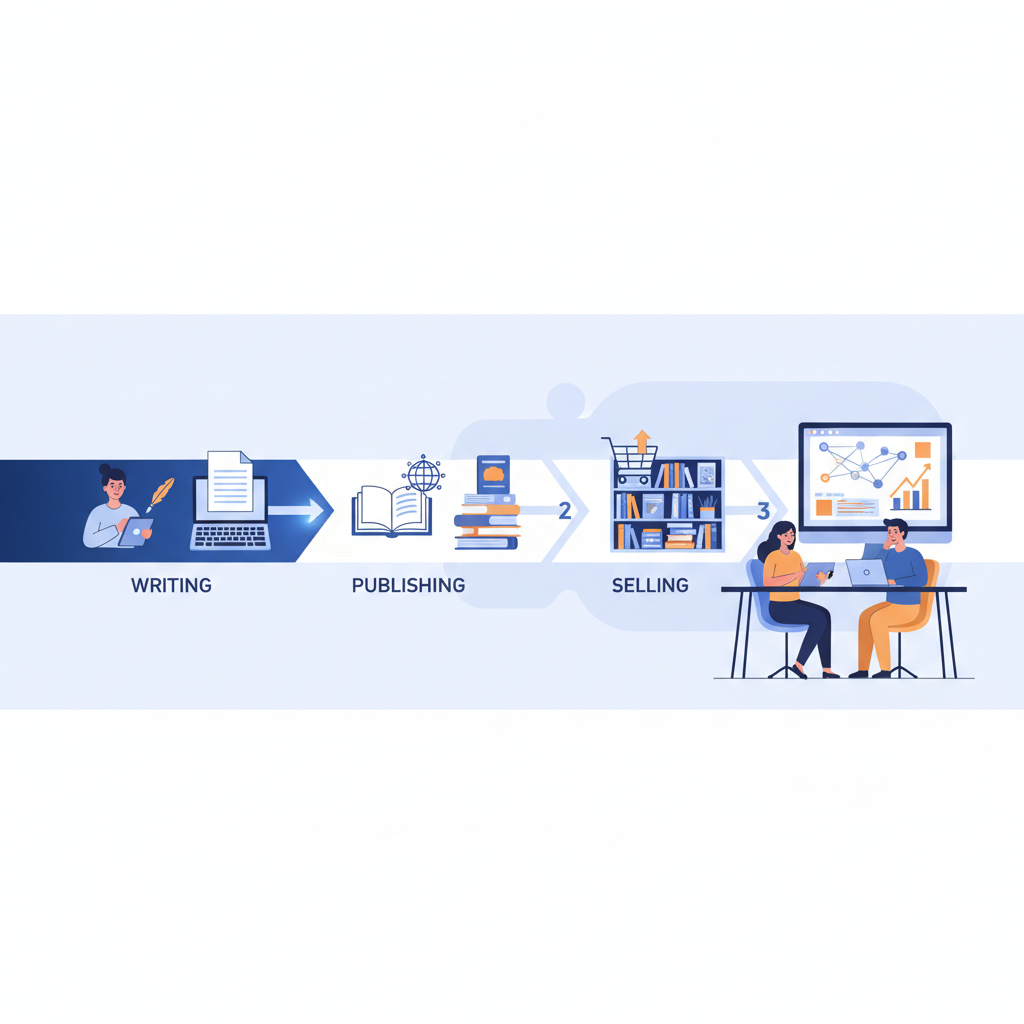
Ebooks Beginner Guide
This guide is a practical, no-fluff walkthrough of how to write, publish, and sell ebooks. It's written for writers who want a realistic starting plan instead of recycled internet advice. By the end, you'll know which models are actually worth your time, how much money and effort each one demands, and the exact next step to take this week.
VENILECT tracks 100 online business opportunities across 20 categories. We've pulled the highest-leverage options for this topic into one focused playbook below, with internal links to deeper opportunity profiles, head-to-head comparisons, and our personalized assessment tool.
What this guide covers
We'll start with the honest definition of ebooks, walk through who it suits and who it doesn't, then break down the operating model: startup cost, time to first revenue, weekly hours, scalability, and what 'good' looks like at 6 and 12 months. Each section links to the relevant opportunity profile inside VENILECT so you can drill deeper at any point.
Our recommendations aren't generic. They're filtered against the 100-opportunity database, weighted by audience fit, beginner difficulty, and recent market traction. If a model gets recommended elsewhere but doesn't earn its slot here, we'll tell you why we left it out.
Why ebooks works in 2026
Three structural shifts make 2026 a particularly strong year to start. First, AI tooling has collapsed the production cost of digital assets — copy, design, code, and video can all be drafted in minutes, which lowers the capital floor and rewards operators who ship instead of perfect. Second, distribution is fragmenting: SEO, short-form video, paid newsletters, and niche communities each reach audiences traditional channels miss. Third, buyer skepticism is up, which means specific, well-positioned operators outperform generalists for the first time in years.
The upshot for writers: the playbook is narrower than it was in 2021, but it works. The winners pick one wedge, ship a real offer in 30 days, and stack distribution from there.
Who this is and isn't a fit for
Good fit if you: are willing to spend 8-15 focused hours per week for 90 days before judging the result, can stomach an ugly first version, and either have a small budget for tools (under $200/month) or are comfortable trading time for money in the early days.
Bad fit if you: need income this month, expect step-by-step certainty, or aren't willing to pick a niche. Most failed online businesses fail at niche selection, not execution — we'll cover that next.
The opportunities we recommend
These are the specific business models we'd start with, ranked by realistic beginner fit. Each one links to a full opportunity profile with scores for startup cost, difficulty, time to revenue, scalability, and passive income potential.
Ebooks
Why it makes the list: it scores well on the dimensions that matter for writers, and the path from zero to first dollar is short enough that most operators don't quit before reaching it. See the Ebooks profile for full scores, pros and cons, startup requirements, and similar opportunities.
Start with this if you want a clear, validated playbook with a track record. It pairs especially well with our personalized assessment, which will weight it against your actual time, budget, and skill profile.
Amazon KDP
Why it makes the list: it scores well on the dimensions that matter for writers, and the path from zero to first dollar is short enough that most operators don't quit before reaching it. See the Amazon KDP profile for full scores, pros and cons, startup requirements, and similar opportunities.
Start with this if you want a clear, validated playbook with a track record. It pairs especially well with our personalized assessment, which will weight it against your actual time, budget, and skill profile.
Online Courses
Why it makes the list: it scores well on the dimensions that matter for writers, and the path from zero to first dollar is short enough that most operators don't quit before reaching it. See the Online Courses profile for full scores, pros and cons, startup requirements, and similar opportunities.
Start with this if you want a clear, validated playbook with a track record. It pairs especially well with our personalized assessment, which will weight it against your actual time, budget, and skill profile.
Newsletters
Why it makes the list: it scores well on the dimensions that matter for writers, and the path from zero to first dollar is short enough that most operators don't quit before reaching it. See the Newsletters profile for full scores, pros and cons, startup requirements, and similar opportunities.
Start with this if you want a clear, validated playbook with a track record. It pairs especially well with our personalized assessment, which will weight it against your actual time, budget, and skill profile.
At a Glance
| Option | Startup Cost | Time to First $ | Difficulty | Best For |
|---|---|---|---|---|
| Ebooks | Low | 2-3 months | Medium | Writers and Creatives |
| Amazon KDP | Low | 2-3 months | Medium | Aspiring Authors |
| Online Courses | Medium | 3-4 months | High | Educators and Experts |
| Newsletters | Low | 1-2 months | Medium | Communicators |
How to get started in 30 days
Most people fail by spending 30 days 'learning' instead of 30 days shipping. Reverse that order. The plan below assumes 10 hours per week — adjust as you have more or less.
Week 1 — Pick one model and one niche
Choose one opportunity from the list above. Don't keep shopping. Then pick a niche specific enough that you could name 50 ideal customers — 'small dental practices in metro Phoenix' beats 'dentists'. Specificity is the whole game in the first 90 days.
Week 2 — Build the smallest possible offer
Whatever the model, define an offer that can be delivered in under two weeks for a single customer. Write a one-page description, set a price you'd be embarrassed to charge a friend, and put up a landing page. Anything fancier is procrastination.
Week 3 — Reach 50 prospects manually
No ads, no funnels, no automation. Email, DM, or call 50 humans who fit the niche. Most readers skip this step; it's the step that separates real businesses from hobbies. Aim for 3-5 real conversations, not 50 polite no-replies.
Week 4 — Close one and over-deliver
Close one paying customer, even at a steep discount, and ship them an embarrassingly good outcome. Their testimonial becomes the asset that funds your next 30 days.
After day 30, switch from outreach to a repeatable acquisition channel — SEO, content, paid ads, partnerships, or referrals — based on which lane your chosen model rewards. The opportunity profile for Ebooks covers channel choice in detail.
Positioning that actually converts
The single highest-leverage decision in ebooks is positioning. A clear, narrow positioning statement does more work than any funnel, ad campaign, or piece of content you'll ever build. The format that works in 2026: 'I help [specific segment] get [specific outcome] without [specific objection].' If your statement doesn't make at least 80% of the market self-select out, it's too broad. Tightening positioning by 2x typically lifts conversion by 3-5x, because qualified buyers feel the message was written for them and unqualified ones leave faster.
Test your positioning against three questions: can a prospect repeat it back to a friend without changing the words; would a competitor be uncomfortable claiming the same thing; and does it imply a clear next step? If any answer is no, rewrite before you spend another dollar on distribution.
Distribution choices
Every viable ebooks business gets traction from one of five channels in the first year: SEO, short-form video, paid ads, cold outreach, or partnerships and referrals. Pick one. Going deep on a single channel for 12 months beats spreading thin across all five every single time. The right channel depends on margin per customer, sales cycle, and your personal strengths — the opportunity profiles linked below include channel guidance per model.
A useful rule: if your average customer is worth under $200, you need an organic or product-led channel; paid acquisition math won't work. If average customer value is over $2,000, cold outreach and partnerships are usually the fastest path. Between those, paid ads can work but require disciplined creative testing.
Realistic income expectations
Honest numbers from operators we track: most writers who execute the 30-day plan above and stick with it weekly reach their first $1,000 month between months 3 and 6. The $5K/month threshold typically arrives between months 9 and 18, and only for operators who picked a model with real scalability and stayed consistent.
If you see screenshots of $50K months in month two, assume the operator had an existing audience, prior expertise, or paid acquisition skill. None of those are bad — they're just not the beginner case.
Common pitfalls to avoid
- Switching models every 60 days. The compounding shows up at month 6+; quitting at month 3 guarantees nothing.
- Picking a niche that's too broad. 'Coaches' isn't a niche. 'Group fitness coaches with 5+ locations' is.
- Building before selling. Sell the offer first; build the deliverable around real feedback.
- Ignoring distribution. A great product with no acquisition channel is a hobby. Pick one channel and get embarrassingly good at it before adding a second.
- Underpricing. Doubling your price filters out the worst clients and forces you to actually deliver.
Tools and resources
You do not need a full stack to start. A landing page builder, an email tool, a payment processor, and a single channel-specific tool (e.g. an SEO tracker, an ad manager, or a video editor) cover 95% of cases for the first 6 months. Resist the urge to subscribe to anything until a real customer is on the other side of it.
Related opportunities
- Ebooks
- Amazon KDP
- Online Courses
- Newsletters
Exploring Related Opportunities
As digital publishing grows, a world of related opportunities opens for aspiring authors and entrepreneurs. Each option offers unique pathways for monetization, audience engagement, and brand growth. Knowing which avenue to explore depends on personal skillsets, initial costs, and the commitment one's ready to invest.
Ebooks: A Gateway
Authoring ebooks remains an accessible entry point for creatives. The low upfront investment—often limited to costs for editing, cover design, and marketing—makes it appealing. Digital platforms, such as Amazon Kindle Direct Publishing (KDP), simplify the publishing process, allowing authors to retain 70% royalties on sales primarily if pricing meets platform guidelines.
Exploring the ebooks beginner guide could set you on the right path to success.
Leveraging Amazon KDP
Amazon KDP stands as one of the most popular ebooks platforms, known for its ease of use and extensive reach. Beginners must account for the learning curve in navigating its dashboard and understanding formatting requirements. Despite these challenges, it provides substantial data analytics tools that help refine marketing strategies.
Consider investing time in understanding market trends and customer preferences via features like Kindle Spy or Publisher Rocket. Allocating budget toward promotions such as Amazon Advertising boosts visibility significantly, though results can vary.
Online Courses: Diversify with Expertise
Supplementing ebooks with online courses transforms passive readers into interactive learners, allowing content creators to deepen their educational impact. Platforms like Udemy or Teachable facilitate course creation, offering tools to design, market, and distribute knowledge efficiently. Initial costs may cover software subscriptions and course materials creation, but potential for passive income grows as users engage.
Building Audiences Through Newsletters
Newsletters foster relationships with audiences, providing a direct channel for updates, exclusive content, and engagement. Services like Mailchimp or ConvertKit aid in managing lists and tracking email performance, ensuring newsletters serve as a consistent source of traffic back to ebook projects or online courses.
Strategically, newsletters offer cross-promotional advantages, allowing creators to launch new materials to an already engaged audience. However, consistency is key—readers expect value and regular communication. Plan content calendars and automate email sequences to maintain engagement without overwhelming your workload.
These related opportunities complement an ebook project, each with unique strengths and challenges. Careful planning and awareness of market trends can maximize success, making the journey into the digital content creation exciting and rewarding.
Related comparisons
Take the assessment
If you're still unsure which of these models fits your situation best, take the VENILECT personalized assessment. It scores all 100 opportunities against your budget, weekly time, experience level, and risk tolerance, and returns the top 5 matches with reasoning.
Key Benefits of the Personalized Assessment
Taking an assessment designed to align with your personal and financial circumstances offers several key advantages. First, it simplifies the overwhelming task of sifting through numerous opportunities. Rather than spending countless hours researching each option individually, the assessment quickly narrows down the possibilities to those best suited to you.
Time Commitment and Cost
The VENILECT personalized assessment is structured to be both quick and comprehensive. Typically, it takes about 15 to 20 minutes to complete, allowing you to evaluate your options efficiently without a significant time investment. The assessment itself is free, ensuring that anyone interested can access this valuable tool without upfront costs.
Realistic Expectations and Common Mistakes
It's crucial to approach the assessment with realistic expectations. Some beginners make the mistake of assuming that perfect matches will guarantee immediate success. It's essential to remember that the assessment is a starting point in your journey, providing targeted suggestions that align with your specific criteria.
Another common mistake is not truly considering one's experience level and risk tolerance. For example, a choice that appeals due to high potential rewards might not be suitable if it carries a significant risk and you are risk-averse. Ensure you answer assessment questions honestly and thoughtfully to get the most accurate results.
Practical Implementation Tips
After receiving your top matches, it's important to further research each recommendation. Look into user reviews, additional resources, and how others have successfully implemented these models. Gather insights from online forums or communities dedicated to your top opportunities to gain practical understanding and tips on getting started.
Also, consider experimenting with a small project or using trial versions of specific tools if they are recommended as part of your top matches. This hands-on approach can provide invaluable experience and insights before making larger commitments.
Next steps
- Browse all business opportunities
- Take the personalized assessment
- Compare opportunities side-by-side
- Explore business categories
Frequently asked questions
How much money do I need to start ebooks?+
Most beginners can validate ebooks with under $500 in tooling and ads. The bigger investment is consistent weekly time over 90+ days, not upfront cash.
How long until ebooks produces income?+
Operators who follow the 30-day plan in this guide typically reach their first paying customer within 30-60 days, and a repeatable $1,000/month between months 3 and 6.
Is ebooks still a good idea in 2026?+
Yes, with a much narrower playbook than in prior years. AI has lowered production costs, but it has also raised the bar for positioning and distribution. Niching down hard is the single biggest unlock.
Do I need an audience or prior experience?+
No. The plan in this guide assumes zero audience. Manual outreach to 50 fit prospects in week 3 replaces the audience for the first 6 months.
Which model on this list is the easiest to start?+
It depends on your time, budget, and skill profile. The [VENILECT assessment](/quiz) ranks all 100 opportunities against your inputs and returns the top 5 matches with reasoning.
What are common mistakes when starting ebooks?+
Common mistakes include switching models too frequently, picking too broad of a niche, building before selling, ignoring distribution, and underpricing. Ebooks require focus on niche selection and testing the market before investing heavily in production. Consistency is key to building a successful business.
Not sure which business is right for you?
Answer 7 quick questions and get personalized matches from 100+ opportunities.
Take the assessment