Dropshipping vs Print On Demand: Which Should You Start in 2026?
Honest head-to-head: Dropshipping vs Print On Demand. Startup cost, scalability, time to revenue, and who each one suits.
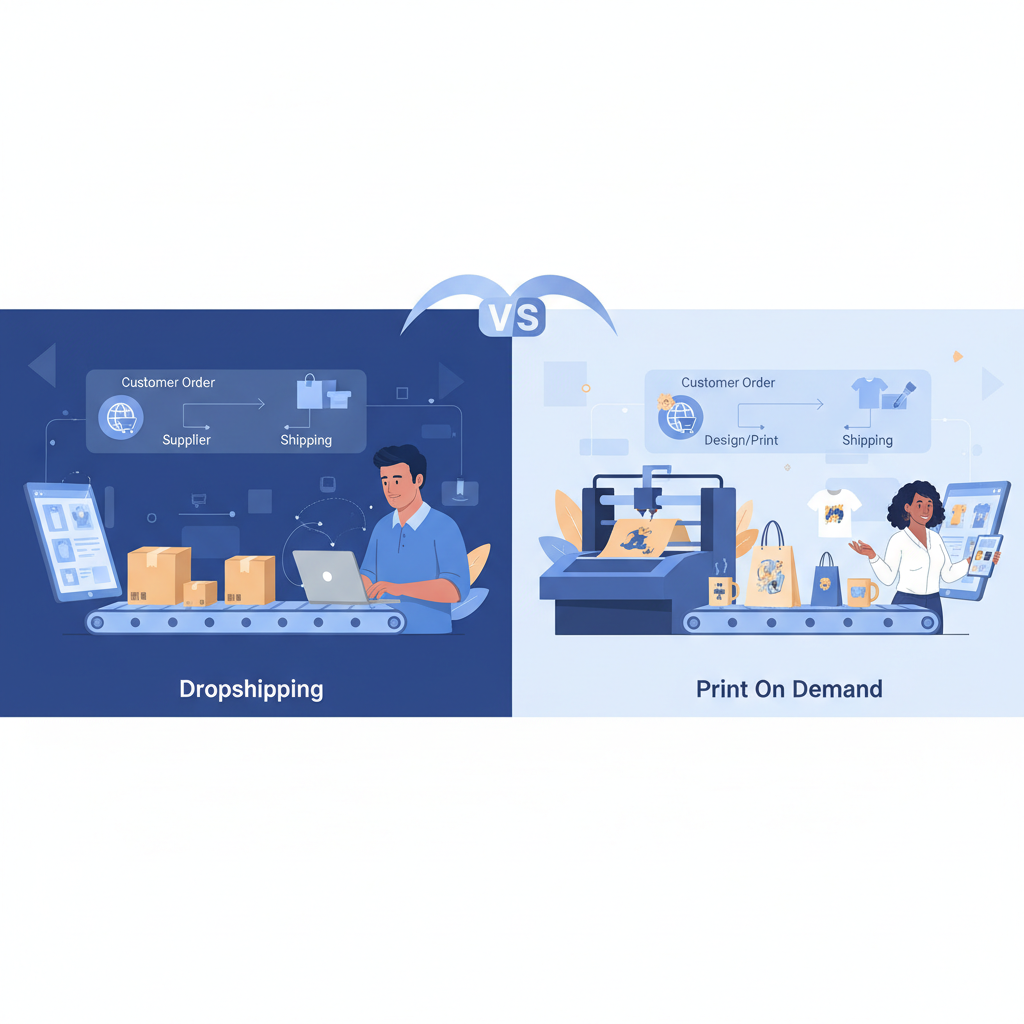
Dropshipping vs Print On Demand: Which Should You Start in 2026?
Both Dropshipping and Print On Demand show up on most 'best online business' lists, but they reward very different operators. This head-to-head compares them on startup cost, time to first revenue, weekly hours, scalability, passive income potential, and the kind of person each one suits — then gives a clear recommendation.
For live, data-driven scores and a side-by-side metric breakdown, use the Dropshipping vs Print On Demand comparison engine. This article is the qualitative companion.
At a Glance
| Option | Startup Cost | Time to First $ | Difficulty | Best For |
|---|---|---|---|---|
| Dropshipping | $300–$2,000 | 1-3 months | Easy | Fast cash flow |
| Print On Demand | $0–$300 | 3-6 months | Moderate | Creative individuals, designers |
Startup cost
Dropshipping and Print On Demand differ meaningfully on capital required. Dropshipping typically needs investment in tooling and (depending on the model) ads or inventory, while Print On Demand tends to front-load either skill development or audience building. Neither requires venture capital, but they have different cash-burn profiles in the first 90 days. The opportunity profiles linked above include exact cost ranges.
Time to first revenue
Dropshipping tends to reach first revenue faster when you already have a clear ICP and can run manual outreach; Print On Demand usually has a longer ramp because it relies on compounding distribution. If you need money this quarter, the faster-revenue model is the safer pick. If you can wait two quarters for compounding, the second one often produces a bigger ceiling.
Weekly hours and operating load
Dropshipping is operationally lighter once systemized but can require burst hours during client delivery or launch windows. Print On Demand is more evenly demanding week to week, which suits operators who prefer rhythm over spikes. Neither is genuinely passive in year one.
Understanding Operational Demand
Operating a dropshipping business might initially seem like the path of least resistance. Once a system is in place—covering supplier relationships, inventory management software, and automated customer service tools—routine operations can indeed feel less burdensome. However, the model is highly susceptible to sudden influxes of workload, especially during promotions or new product launches where swift action is needed to secure stock and ensure timely delivery.
In contrast, Print On Demand (POD) typically involves a steadier workflow. Daily tasks can average between 3 to 5 dedicated hours, encompassing design briefings, supplier communications, marketing strategies, and customer engagement through social media channels. This consistency appeals to many who value a predictable schedule, as opposed to dealing with the erratic peaks characteristic of dropshipping.
Beginners' Common Mistakes
Newcomers often underestimate the ongoing customer support component in both models. Both dropshipping and POD require responsive and empathetic support to manage queries, returns, or product issues effectively. Failing to have this setup from the outset can lead to unsatisfied customers despite a well-managed supply chain.
Another common pitfall is neglecting time management. For dropshippers, not having contingency plans for peak periods can lead to bottlenecks, while POD entrepreneurs might struggle if they do not allocate sufficient time for creative development and marketing.
Tools to Streamline Operations
Utilizing specialized tools can drastically reduce the weekly operational load. For dropshipping, platforms like Oberlo or Spocket integrate smoothly with Shopify, automating product importation and order processing. Meanwhile, POD enthusiasts may benefit from services like Printful or Teespring, which streamline the production and shipping process directly from user-designed templates.
Making the Right Choice
Ultimately, deciding between dropshipping and Print On Demand hinges on your personal preferences for work style and operational commitment. If you thrive in high-pressure, dynamic situations and value scalability, dropshipping might be your path. Conversely, if you prioritize consistent workload and have a penchant for design and branding, Print On Demand can provide a more fitting business model.
Understanding these nuances not only prepares you for the weekly hours and operating demands each model presents but also equips you to make a decision that aligns with your entrepreneurial goals and lifestyle needs.
Scalability
Print On Demand generally scales further without proportional time investment, especially with productization. Dropshipping can scale with hires or systems, but the ceiling depends heavily on niche selection and channel maturity. Use the comparison engine for the exact scalability scores side-by-side.
Practical Examples of Scalability
Consider a Print On Demand business that designs custom t-shirts. With the right integration tools, such as Printful or Printify, each new design can automatically be added to your online store with minimal additional work. This saves time and allows business owners to focus on marketing and customer service rather than inventory management. As demand increases, leveraging these platforms allows for streamlined operations without a linear increase in workload.
In contrast, a dropshipping business scaling in the same fashion might require more effort. Suppose you run a dropshipping store specializing in home gadgets. You might need to continuously search for new suppliers or respond to supply chain delays, which can take up substantial time. To efficiently manage scaling, investing in automation tools like Oberlo or Spocket can help mitigate these challenges. However, the need for consistent supplier evaluation and potential staff to manage customer inquiries adds a layer of complexity.
Cost Considerations for Scaling
Scalability in both models comes with different cost structures. For Print On Demand, costs are often tied to marketing and design development. Investing upfront in a good graphic designer, though costly, can set the foundation for high-quality product offerings that require less frequent adjustments.
For dropshipping, costs might include higher payment for automation tools and possibly hiring a virtual assistant to handle increasing orders and customer service requests efficiently. Although the upfront costs might seem lower, the operational costs can add up as the business scales, particularly if additional staff is needed to maintain high service levels.
Beginner Mistakes and Tips for Scalability
Newcomers in both fields often underestimate the need for niche research. In Print On Demand, choosing a niche with a dedicated following can make marketing efforts more effective. For dropshipping, the niche should not only be popular but also have reliable suppliers worth partnering with.
Beginners should also invest time in setting up robust systems early. For Print On Demand, this might mean investing in quality e-commerce platforms like Shopify for seamless integrations. For dropshipping, thorough research into reliable automation tools and plugins is crucial.
Set realistic expectations—the road to scaling in either business is not always smooth. Be prepared to tackle unexpected hurdles and adjust strategies as needed. Both models can potentially scale significantly with the right preparations and tools, but understanding and accepting the inherent complexities from the start can make all the difference in achieving sustainable growth.
Passive income potential
Neither is truly passive, but Print On Demand usually compounds into a more passive shape after 18-24 months thanks to audience, content, or product flywheels. Dropshipping can also become semi-passive with strong delivery systems and senior team members, but it tends to require more active leadership.
Frequently Asked Questions
Is Dropshipping or Print On Demand better for beginners?
Dropshipping is usually easier to get to first revenue because the feedback loop is shorter, but Print On Demand often has a higher long-term ceiling. Beginners who need cash flow should start with Dropshipping; beginners who can self-fund 6+ months should consider Print On Demand.
Which scales better, Dropshipping or Print On Demand?
Print On Demand typically scales further without proportional time investment, especially with productization. Dropshipping scales with systems and hires but has a more service-heavy ceiling.
Which produces income faster?
Dropshipping tends to reach first revenue in 30-60 days with manual outreach. Print On Demand usually takes 3-6 months because it depends on compounding distribution.
Can I do both at the same time?
Not in the first 6 months. Splitting attention between two models almost always produces two stalled businesses. Pick one, ship for 90 days, then revisit.
Where can I see live scores side-by-side?
Use the Dropshipping vs Print On Demand comparison engine for live scores on startup cost, difficulty, scalability, and passive income potential.
What are the risks of choosing the wrong model?
Choosing the wrong model can lead to wasted time and resources. For instance, if someone selects dropshipping but lacks quick decision-making skills and customer service finesse, they may become overwhelmed. Conversely, if someone picks Print On Demand without a passion for design or long-term commitment, they might struggle to build a profitable brand. Using VENILECT's business opportunity finder can help mitigate this risk by aligning your strengths with the right model.
How do I know if Print On Demand aligns with my skills?
Print On Demand suits individuals who excel in creativity and design, as well as those willing to invest time in building brand identity. It requires keen attention to market trends and customer preferences. If you enjoy crafting unique designs and have patience for gradual growth, this model may align well with your skills. Reviewing related opportunities like the Etsy Print on Demand guide can offer additional insights.
Which is easier for beginners?
For most beginners reading this, the easier model is the one that matches your existing strengths. If you're comfortable with sales conversations and short feedback loops, start with Dropshipping. If you prefer to build in public and play a longer compounding game, start with Print On Demand.
Realistic Expectations
When considering "dropshipping vs print on demand," it's important for beginners to set realistic expectations about the time and effort required to see results. While neither model is a "get-rich-quick" scheme, they offer unique opportunities that cater to different skills and interests.
Practical Examples and Tools
Dropshipping: Let's say you choose to start a dropshipping business focused on tech gadgets. You might use a platform like Shopify, paired with Oberlo or AliExpress, to find products. Investing time in learning how to create effective online ads might be necessary to drive traffic to your store. Beginners might face challenges like handling customer service inquiries or managing supplier issues, which is a critical learning step.
Print On Demand: If you're leaning towards Print On Demand, envision launching a custom T-shirt business. Using services like Printful or TeeSpring, you can upload your designs and sync them with an e-commerce platform such as Etsy or Shopify. One key advantage is creativity without the upfront inventory costs. However, the design process itself can be time-consuming, and marketing your unique products requires strategic efforts in building your brand identity.
Common Beginner Mistakes
Dropshipping Mistakes: A common mistake for beginners in dropshipping is underestimating the importance of good supplier relationships. Choosing unreliable suppliers can lead to delayed shipments and dissatisfied customers. Also, new entrepreneurs often spend insufficient time researching market demand.
Print On Demand Mistakes: For Print On Demand ventures, beginners might not realize the importance of high-quality designs. Low-quality graphics can lead to poor customer satisfaction. Additionally, neglecting to brand each product effectively can result in a weak market presence.
Time Commitment
Both models require significant time investment upfront. With dropshipping, expect to spend hours sourcing reliable suppliers, crafting marketing strategies, and tweaking your store design. Print On Demand also demands time generating and refining creative designs, along with consistent marketing efforts to build your brand presence.
In conclusion, considering these factors and aligning them with your personal strengths and interests can provide a clearer pathway to choosing the right model. Each option has its learning curve, but with dedication, they can both lead to a successful entrepreneurial journey.
Who should choose Dropshipping
Pick Dropshipping if you want faster cash flow, prefer working directly with clients or customers, and are willing to do manual outreach in the first 60 days. It rewards operators who execute consistently on a narrow ICP and dislike the slowness of pure audience-building.
Who should choose Print On Demand
Pick Print On Demand if you can self-fund a longer ramp, enjoy compounding asset-style work (content, product, audience), and want a higher long-term ceiling with less per-deal effort. It rewards operators who can stay consistent for 6-12 months without immediate validation.
Final recommendation
If you're brand new and need momentum, start with Dropshipping. If you already have some runway and want the bigger asset, start with Print On Demand. Both are legitimate. Both have produced 6 and 7-figure operators. The mistake is starting both at once and shipping neither.
For a personalized recommendation weighted against your budget, time, and skill profile, take the VENILECT assessment — it ranks both of these (and 98 other opportunities) against your inputs.
Related comparisons
- Browse the full comparison engine
- Dropshipping profile
- Print On Demand profile
- Take the personalized assessment
Related Resources
Print on Demand
Print on demand is an excellent option for those who want to launch an online business with creative flair and minimal upfront investment. The startup costs range from $0 to $300, primarily covering design software subscriptions or optional marketing efforts. With platforms like Shopify or Etsy, you can design and sell custom products without holding any inventory.
Time to First Revenue
Time to see your first revenue typically spans 1 to 3 months, as you establish your store and drive traffic. This business model is favorable for beginners due to its low difficulty rating of 2/5, requiring basic design skills and an ability to manage online sales platforms.
Best Suited For
Print on demand is particularly beneficial for designers, artists, or anyone looking to monetize creativity without significant investment. Potential monthly earnings can range from $200 to $10,000, aligning with your marketing effectiveness and product appeal. For more detailed insights, consider visiting our Print on Demand resource page. By effectively leveraging your creativity and marketing, this model can be a rewarding venture for those eager to start an e-commerce business.
Dropshipping
Dropshipping offers a viable entry point into e-commerce with moderate startup costs ranging from $300 to $2000. These expenses typically cover setting up a website, acquiring necessary software tools for order management, and initial marketing efforts. This model requires only beginner-level skills, making it accessible to those unfamiliar with managing physical inventory.
Time to First Revenue
Entrepreneurs can expect to generate their first revenue within 1 to 3 months. This timeline accounts for establishing supplier relationships, optimizing product listings, and implementing effective marketing strategies to draw in customers.
Best Suited For
Ideal for beginners and marketers, dropshipping allows for an income range of $500 to $50,000 per month depending on various factors like niche selection and marketing execution. With a difficulty rating of 3/5, it's a manageable path for those eager to explore online retail without committing to large stock quantities. For more insights and opportunities, visit our Dropshipping page for guidance on getting started in this dynamic market.
Etsy Print on Demand Shop
An Etsy Print on Demand Shop is an excellent option for creative entrepreneurs, especially those with a knack for design. This business model allows you to sell customizable products like t-shirts, mugs, and posters without the need to hold inventory. The startup costs are relatively low, ranging from $50 to $300. These costs typically include purchasing design software, creating product samples, and listing fees on Etsy.
Time to First Revenue
The setup time is minimal, with potential revenue starting within 1 to 2 months as you build your product catalog and optimize your Etsy listings.
Skills and Suitability
With a difficulty rating of 2/5, this model is beginner-friendly, requiring basic design skills and a willingness to market your products effectively. It's ideal for designers and side-hustlers who want to turn their creative ideas into a steady income stream. Earnings can vary widely, from a side income to substantial profits depending on the scale and uniqueness of your designs.
To explore this opportunity further, visit our Etsy Print on Demand Shop page for more insights.
Etsy Print on Demand
Etsy Print on Demand offers a cost-effective way for designers and creative side-hustlers to launch their own businesses. With startup costs typically ranging from $50–$300, you’ll need to consider expenses such as Etsy listing fees, basic design software, and sample products. This low upfront investment makes it accessible for beginners and those wanting to test the waters of entrepreneurship.
Skills Required and Suitability
The model demands a difficulty level of 2/5, making it ideal for beginners. Basic design skills, coupled with a knack for creative product development, are essential. Additionally, marketing proficiency to optimize Etsy listings and attract buyers is beneficial.
Expected Revenue and Timeline
Earnings in this field can span from $500 to $15,000 per month, largely hinging on product uniqueness and marketing efforts. While time to first revenue typically spans 1-3 months, persistence in refining listings and launching new designs plays a crucial role. To embark on this promising venture, consult our Etsy Print on Demand guide for detailed strategies and tips.
Frequently asked questions
Is Dropshipping or Print On Demand better for beginners?+
Dropshipping is usually easier to get to first revenue because the feedback loop is shorter, but Print On Demand often has a higher long-term ceiling. Beginners who need cash flow should start with Dropshipping; beginners who can self-fund 6+ months should consider Print On Demand.
Which scales better, Dropshipping or Print On Demand?+
Print On Demand typically scales further without proportional time investment, especially with productization. Dropshipping scales with systems and hires but has a more service-heavy ceiling.
Which produces income faster?+
Dropshipping tends to reach first revenue in 30-60 days with manual outreach. Print On Demand usually takes 3-6 months because it depends on compounding distribution.
Can I do both at the same time?+
Not in the first 6 months. Splitting attention between two models almost always produces two stalled businesses. Pick one, ship for 90 days, then revisit.
Where can I see live scores side-by-side?+
Use the [Dropshipping vs Print On Demand comparison engine](/compare/dropshipping-vs-print-on-demand) for live scores on startup cost, difficulty, scalability, and passive income potential.
What are the risks of choosing the wrong model?+
Choosing the wrong model can lead to wasted time and resources. For instance, if someone selects dropshipping but lacks quick decision-making skills and customer service finesse, they may become overwhelmed. Conversely, if someone picks Print On Demand without a passion for design or long-term commitment, they might struggle to build a profitable brand. Using VENILECT's [business opportunity finder](/business-opportunity-finder) can help mitigate this risk by aligning your strengths with the right model.
How do I know if Print On Demand aligns with my skills?+
Print On Demand suits individuals who excel in creativity and design, as well as those willing to invest time in building brand identity. It requires keen attention to market trends and customer preferences. If you enjoy crafting unique designs and have patience for gradual growth, this model may align well with your skills. Reviewing related opportunities like the [Etsy Print on Demand guide](/guides/etsy-print-on-demand-beginner-guide) can offer additional insights.
Not sure which business is right for you?
Answer 7 quick questions and get personalized matches from 100+ opportunities.
Take the assessment