Dropshipping vs Amazon FBA: Which Should You Start in 2026?
Honest head-to-head: Dropshipping vs Amazon FBA. Startup cost, scalability, time to revenue, and who each one suits.
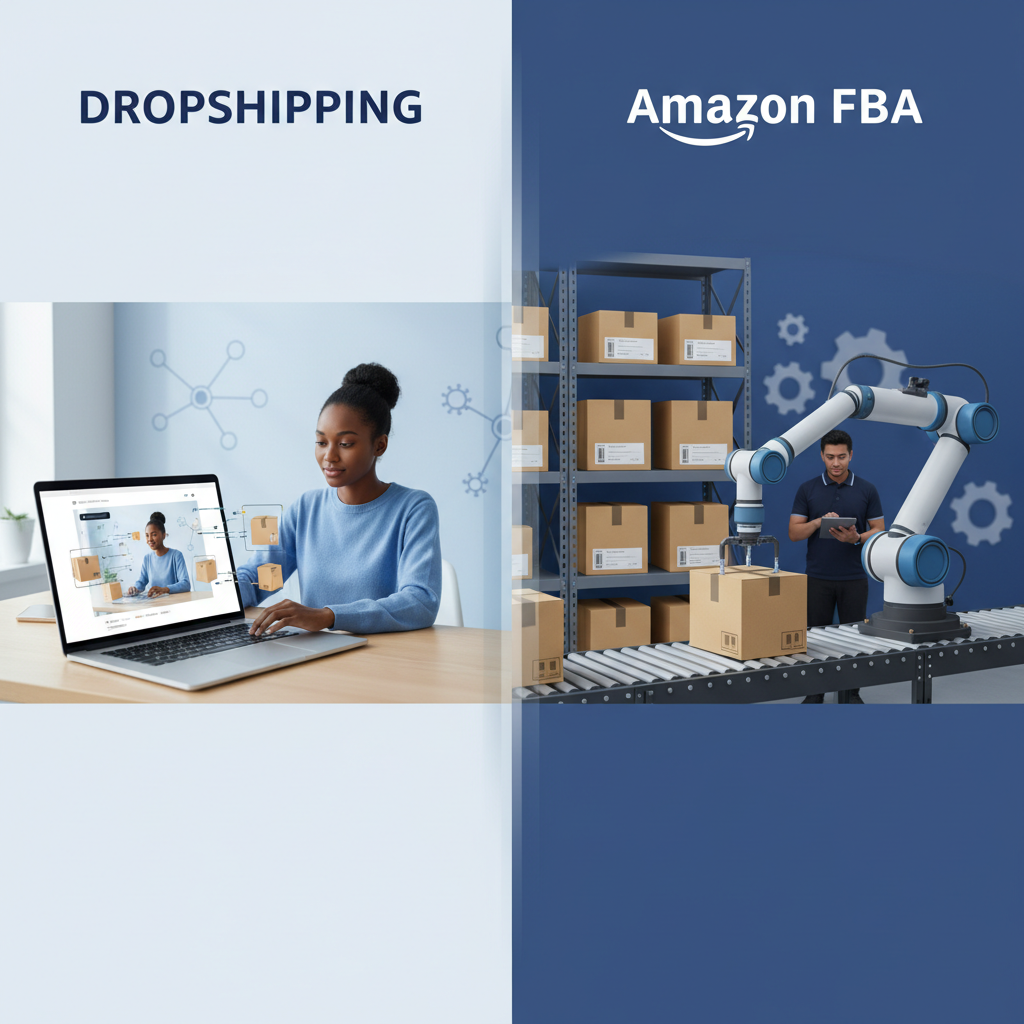
Dropshipping vs Amazon FBA: Which Should You Start in 2026?
Both Dropshipping and Amazon FBA show up on most 'best online business' lists, but they reward very different operators. This head-to-head compares them on startup cost, time to first revenue, weekly hours, scalability, passive income potential, and the kind of person each one suits — then gives a clear recommendation.
For live, data-driven scores and a side-by-side metric breakdown, use the Dropshipping vs Amazon FBA comparison engine. This article is the qualitative companion.
At a Glance
| Option | Startup Cost | Time to First $ | Difficulty | Best For |
|---|---|---|---|---|
| Dropshipping | $300 - $2000 | 1-3 months | 3/5 | Beginners with marketing skills |
| Amazon FBA | $3000 - $15000 | 2-6 months | 4/5 | Capital-ready operators |
- Dropshipping: see the full Dropshipping profile for scores, pros, cons, and startup requirements.
- Amazon FBA: see the full Amazon FBA profile for scores, pros, cons, and startup requirements.
Startup cost
Dropshipping and Amazon FBA differ meaningfully on capital required. Dropshipping typically needs investment in tooling and (depending on the model) ads or inventory, while Amazon FBA tends to front-load either skill development or audience building. Neither requires venture capital, but they have different cash-burn profiles in the first 90 days. The opportunity profiles linked above include exact cost ranges.
Time to first revenue
Dropshipping tends to reach first revenue faster when you already have a clear ICP and can run manual outreach; Amazon FBA usually has a longer ramp because it relies on compounding distribution. If you need money this quarter, the faster-revenue model is the safer pick. If you can wait two quarters for compounding, the second one often produces a bigger ceiling.
Weekly hours and operating load
Dropshipping is operationally lighter once systemized but can require burst hours during client delivery or launch windows. Amazon FBA is more evenly demanding week to week, which suits operators who prefer rhythm over spikes. Neither is genuinely passive in year one.
What to Expect in Terms of Time Commitment
Understanding how much time you’ll need to allocate each week is crucial when deciding between dropshipping and Amazon FBA. While dropshipping can initially appear more forgiving, setting up an efficient system demands substantial upfront effort. New dropshippers often underestimate the time needed for product research, supplier negotiations, and building an appealing online storefront, which can result in late nights and learning curves.
Once a dropshipping operation is established, daily tasks include managing customer inquiries, processing orders, and handling any logistical issues. Periods of product launches or seasonal sales spikes may require additional hours, but effective time management tools like Trello or Asana can help manage these bursts. A handy tip for beginners is to start small with a handful of products to accurately gauge the time required and gradually scale as confidence builds.
Amazon FBA, while demanding consistent weekly hours, reduces the burden of shipping and inventory management. However, it involves other commitments such as optimizing product listings, managing pay-per-click (PPC) campaigns, and monitoring FBA fees and storage limits. Beginners might find creating a reliable product inspection process beneficial to avoid negative reviews and returns, which can increase your operational load if not managed properly.
Evaluating Your Personal Schedule
Assess your regular weekly availability before choosing your model. If you have a volatile schedule with varying commitments, dropshipping may offer more flexibility as it allows you to adapt your workload to your availabilities. Conversely, if consistency fits your routine more securely, Amazon FBA’s predictable weekly load can help maintain balance and potentially create more sustainable habits.
Common Mistakes and Considerations
One common pitfall in dropshipping is ignoring the importance of setting boundaries for work hours. The 24/7 nature of online retail can lead to burnout if clear work-life separation isn’t maintained. On the other hand, newcomers to Amazon FBA often become overwhelmed by the various analytical tools and data points they need to track consistently. Taking time to master tools like Helium 10 or Jungle Scout can significantly optimize your efficiency and focus.
Choosing between dropshipping and Amazon FBA requires an honest assessment of your preferred operational style and work rhythm. Each model has its unique demands and learning curves, making it essential to align them with your personal and professional commitments for a successful eCommerce venture.
Scalability
Amazon FBA generally scales further without proportional time investment, especially with productization. Dropshipping can scale with hires or systems, but the ceiling depends heavily on niche selection and channel maturity. Use the comparison engine for the exact scalability scores side-by-side.
Practical Examples of Scalability
To illustrate, consider a business that starts with Amazon FBA by choosing a handful of products to sell. With initial success, the entrepreneur can invest profits into more inventory and potentially outsource logistics entirely to Amazon. This means even as order numbers increase, the business owner doesn't physically handle products, allowing scalability with less time commitment.
In contrast, dropshipping often requires diversifying the supplier base to scale effectively. Suppose you're selling fashion items through a dropshipping model. You might start with one supplier but need to quickly find additional suppliers to meet rising demand and ensure availability. Each new supplier relationship requires initial time investment but can be automated gradually with the right systems.
Cost and Time Considerations
In terms of costs, Amazon FBA might require a significant upfront investment to secure bulk inventory, whereas dropshipping offers a lower barrier to entry. However, managing inventory comes with opportunities to negotiate for better pricing over time, enhancing profitability with scale.
From a time perspective, beginners often underestimate the intricacies of managing supplier relationships in dropshipping. Setting up reliable systems to handle orders at scale, such as automated inventory management tools, can mitigate these demands but requires technical savvy or investment in expertise.
Tips for Effective Scaling
- For Amazon FBA: Focus on data analytics tools that help predict demand and optimize inventory levels. This reduces waste and enhances profitability.
- For Dropshipping: Invest in robust software platforms that streamline supplier communications and order tracking, which minimizes manual intervention and errors.
Advantages and Disadvantages
Amazon FBA offers a clear advantage in terms of logistics handling, customer service, and the ability to leverage Amazon's extensive market reach. Dropshipping, however, provides flexibility in product range and adaptability to market trends without tying up capital in stock.
Beginners often struggle with scalability due to overestimating short-term profits or underestimating logistical complexities. Starting with a realistic growth plan and being adaptable to changes in consumer demand or supplier performance can mitigate these challenges effectively.
Passive income potential
Neither is truly passive, but Amazon FBA usually compounds into a more passive shape after 18-24 months thanks to audience, content, or product flywheels. Dropshipping can also become semi-passive with strong delivery systems and senior team members, but it tends to require more active leadership.
Which is easier for beginners?
For most beginners reading this, the easier model is the one that matches your existing strengths. If you're comfortable with sales conversations and short feedback loops, start with Dropshipping. If you prefer to build in public and play a longer compounding game, start with Amazon FBA.
Practical Examples
Imagine you want to dive into e-commerce but lack the manufacturing connections or capital to hold inventory. Dropshipping could allow you to create an online store using platforms like Shopify, then partner with suppliers from sites such as AliExpress. On the other hand, if you’ve got savings and are ready to invest in inventory, Amazon FBA enables you to leverage Amazon’s well-oiled logistics machine, but requires you to ship your products to Amazon's warehouses first.
Cost Line Items
For dropshipping, upfront costs can be lower. You’ll typically pay for the domain name (around $10), a Shopify subscription (starting at $29/month), and some initial marketing expenses. For Amazon FBA, expect costs like inventory purchases, Amazon seller fees, storage fees, and PPC advertising spend.
Time Commitment
Dropshipping can be time-efficient initially, especially since there's little setup involved and automation tools like Oberlo can streamline processes. However, as orders increase, managing customer service can become time-consuming. Amazon FBA demands more time upfront because of product research and inventory management but can become relatively passive once it’s up and running.
Common Beginner Mistakes
New dropshippers may overlook the importance of quality customer service and the need for a responsive website, leading to high return rates and dissatisfied customers. Amazon FBA beginners often underestimate the costs of storage and fulfillment fees or fail to optimize their product listings for maximum visibility.
Decision Criteria
Choosing between these models often boils down to your financial situation, willingness to manage logistics, and long-term business vision. Consider whether you prefer controlling product quality closely or benefiting from the expansive infrastructure that Amazon offers.
Tools and Resources
Dropshippers may benefit from tools such as Spocket or DSers to find high-quality suppliers and automate order processing. Amazon FBA users should consider tools like Jungle Scout for product research and Helium 10 to optimize their listings.
Ultimately, while both models have unique challenges and opportunities, understanding these nuances can help you decide which path aligns best with your capabilities and goals. This decision impacts not only the immediate steps you take but also the business you're likely to build over the long term.
Who should choose Dropshipping
Pick Dropshipping if you want faster cash flow, prefer working directly with clients or customers, and are willing to do manual outreach in the first 60 days. It rewards operators who execute consistently on a narrow ICP and dislike the slowness of pure audience-building.
Who should choose Amazon FBA
Pick Amazon FBA if you can self-fund a longer ramp, enjoy compounding asset-style work (content, product, audience), and want a higher long-term ceiling with less per-deal effort. It rewards operators who can stay consistent for 6-12 months without immediate validation.
Final recommendation
If you're brand new and need momentum, start with Dropshipping. If you already have some runway and want the bigger asset, start with Amazon FBA. Both are legitimate. Both have produced 6 and 7-figure operators. The mistake is starting both at once and shipping neither.
For a personalized recommendation weighted against your budget, time, and skill profile, take the VENILECT assessment — it ranks both of these (and 98 other opportunities) against your inputs.
Related comparisons
- Browse the full comparison engine
- Dropshipping profile
- Amazon FBA profile
- Take the personalized assessment
Related Resources
Dropshipping
Dropshipping offers an accessible entry into e-commerce, especially in 2026, due to its minimal startup costs and straightforward implementation. With costs ranging from $300 to $2000, you can start with essential expenses like purchasing a domain, setting up an online store platform subscription, and marketing. This business model allows you to test different products without significant upfront inventory investments. Typically, new dropshippers can expect to see revenue within 1 to 3 months, depending on marketing prowess.
Skills and Suitability
Rated at a difficulty of 3/5, dropshipping is well-suited for beginners and those with marketing skills, as it primarily involves curating and promoting products. It's particularly ideal for those keen on digital marketing, allowing them to leverage social media to reach potential customers. Dropshipping can generate anywhere from $500 to $50,000 a month, depending on effort and strategy,
What to Consider
Beginners often find this model appealing due to its low risk and adaptability in testing various niches. Marketers also thrive in this setup, given their ability to craft compelling campaigns that drive traffic to their online stores without the need to handle inventory directly.
Amazon FBA
Choosing Amazon FBA in 2026 might suit those ready to invest significantly upfront. Startup costs are higher, ranging from $3,000 to $15,000, as they include sourcing inventory, Amazon fees, and initial marketing strategies. Unlike dropshipping, Amazon FBA requires intermediate-level skills to manage inventory, optimize product listings, and navigate Amazon's seller policies.
Skills and Suitability
Rated 4/5 in difficulty, this model is ideal for capital-ready operators who can handle more complex logistics. It’s tailored for individuals capable of overseeing supply chain management and those who possess analytical skills to exploit market trends.
Revenue and Timeline
Although it can take 2 to 6 months to see revenue, Amazon FBA's potential monthly income ranges from $2,000 to $100,000+, making it a lucrative option for those willing to commit. The learning curve is steeper, but the rewards could be substantial, as you tap into Amazon's massive customer base and logistical infrastructure. This approach is best suited for those who have the investment capacity and a willingness to work through the initial complex setup.
Amazon Affiliate Sites
Creating an Amazon Affiliate Site can be an excellent opportunity for those interested in generating passive income through content creation. With a startup cost ranging from just $50 to $500, this model is accessible for bloggers and niche site builders. The expenses primarily cover domain registration, hosting, and basic website design, making it far less capital-intensive compared to Amazon FBA.
Time and Skills
Expect to invest about 3 to 9 months before seeing the first revenue, as establishing a site’s authority and traffic can be gradual. However, with a difficulty rating of 3/5, the learning curve is manageable for beginners equipped with basic online content skills.
Suitable For
This opportunity is particularly well-suited for SEO enthusiasts and those passionate about writing and digital marketing. Given the income potential of $500 to $25,000 per month, it offers promising returns for those who can develop engaging content and effectively capture search traffic.
Merch by Amazon
Merch by Amazon offers an accessible platform for designers and beginners to monetize their creativity with minimal upfront investment. This opportunity requires a startup cost between $0 and $100, encompassing optional expenditures such as graphic design software or premium templates. With a low difficulty rating of 2/5, the barrier to entry is quite manageable, requiring only basic graphic design skills and creativity.
Time and Income Potential
New entrants can expect to see their first revenue within 1 to 3 months of launching their designs on the platform. The time frame to profitability largely depends on the popularity and quality of the designs offered. Income ranges from $200 up to $8,000 per month, providing scalable opportunities based on the number of successful designs marketed.
Suitable For
This platform is particularly ideal for designers eager to gain exposure and a steady income stream through their art. It's also well-suited for beginners who want to kickstart an online business with little financial risk. For more in-depth insights into this opportunity, consider exploring Merch by Amazon.
Frequently asked questions
Is Dropshipping or Amazon FBA better for beginners?+
Dropshipping is usually easier to get to first revenue because the feedback loop is shorter, but Amazon FBA often has a higher long-term ceiling. Beginners who need cash flow should start with Dropshipping; beginners who can self-fund 6+ months should consider Amazon FBA.
Which scales better, Dropshipping or Amazon FBA?+
Amazon FBA typically scales further without proportional time investment, especially with productization. Dropshipping scales with systems and hires but has a more service-heavy ceiling.
Which produces income faster?+
Dropshipping tends to reach first revenue in 30-60 days with manual outreach. Amazon FBA usually takes 3-6 months because it depends on compounding distribution.
Can I do both at the same time?+
Not in the first 6 months. Splitting attention between two models almost always produces two stalled businesses. Pick one, ship for 90 days, then revisit.
Where can I see live scores side-by-side?+
Use the [Dropshipping vs Amazon FBA comparison engine](/compare/dropshipping-vs-amazon-fba) for live scores on startup cost, difficulty, scalability, and passive income potential.
How do initial costs compare between the two models?+
Dropshipping usually requires between $300 - $2,000, mostly for tool subscriptions and marketing. Amazon FBA tends to be more capital-intensive upfront, with expected costs ranging from $3,000 to $15,000 for inventory and FBA fees.
Not sure which business is right for you?
Answer 7 quick questions and get personalized matches from 100+ opportunities.
Take the assessment