Bookkeeping Business vs Virtual Assistant: Which Should You Start in 2026?
Honest head-to-head: Bookkeeping Business vs Virtual Assistant. Startup cost, scalability, time to revenue, and who each one suits.
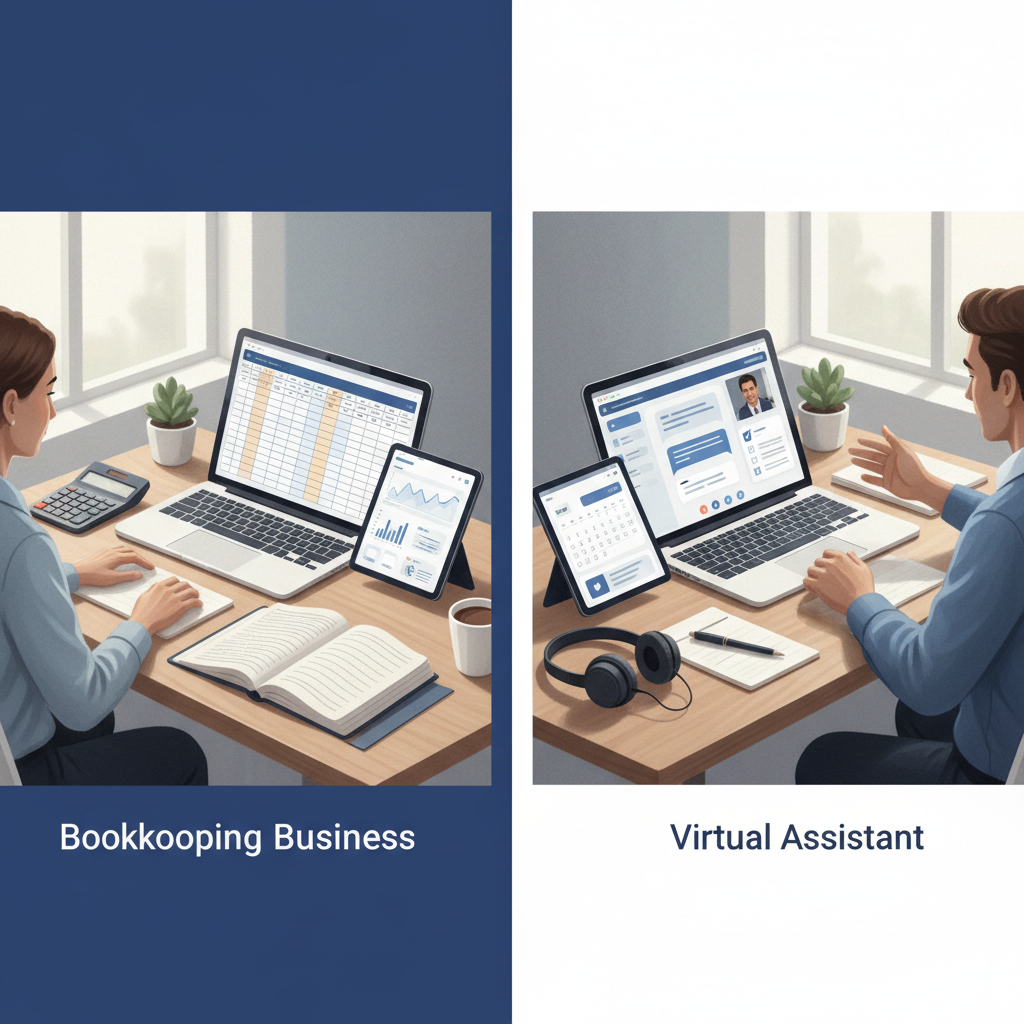
Bookkeeping Business vs Virtual Assistant: Which Should You Start in 2026?
Both Bookkeeping Business and Virtual Assistant show up on most 'best online business' lists, but they reward very different operators. This head-to-head compares them on startup cost, time to first revenue, weekly hours, scalability, passive income potential, and the kind of person each one suits — then gives a clear recommendation.
For live, data-driven scores and a side-by-side metric breakdown, use the Bookkeeping Business vs Virtual Assistant comparison engine. This article is the qualitative companion.
At-a-glance
| Option | Startup Cost | Time to First $ | Difficulty | Best For |
|---|---|---|---|---|
| Bookkeeping Business | $200 - $1000 | 1 - 3 months | 3/5 | Detail-oriented and independent workers |
| Virtual Assistant | $0 - $100 | 1 - 4 weeks | 1/5 | Beginners and operators |
- Bookkeeping Business: see the full Bookkeeping Business profile for scores, pros, cons, and startup requirements.
- Virtual Assistant: see the full Virtual Assistant profile for scores, pros, cons, and startup requirements.
Startup cost
Bookkeeping Business and Virtual Assistant differ meaningfully on capital required. Bookkeeping Business typically needs investment in tooling and (depending on the model) ads or inventory, while Virtual Assistant tends to front-load either skill development or audience building. Neither requires venture capital, but they have different cash-burn profiles in the first 90 days. The opportunity profiles linked above include exact cost ranges.
Time to first revenue
Bookkeeping Business tends to reach first revenue faster when you already have a clear ICP and can run manual outreach; Virtual Assistant usually has a longer ramp because it relies on compounding distribution. If you need money this quarter, the faster-revenue model is the safer pick. If you can wait two quarters for compounding, the second one often produces a bigger ceiling.
Weekly hours and operating load
Bookkeeping Business is operationally lighter once systemized but can require burst hours during client delivery or launch windows. Virtual Assistant is more evenly demanding week to week, which suits operators who prefer rhythm over spikes. Neither is genuinely passive in year one.
Practical Examples and Time Commitment
For someone starting a bookkeeping business, it's common to spend around 10 to 15 hours per week in the initial months setting up accounting systems, networking, and securing initial clients. As your workflow becomes systemized, these hours may decrease, but they'll often concentrate around deadlines such as tax seasons or financial year-end. A virtual assistant, on the other hand, may consistently work 20 to 30 hours per week, handling various tasks like email management, scheduling, and data entry that require regular attention.
Cost Considerations
A bookkeeping business often incurs specific costs such as accounting software subscriptions, professional association memberships, and occasional compliance training. These can add up to several hundred dollars annually. Virtual assistants might spend on productivity tools and communication software like video conferencing or collaborative platforms such as Calendly or Trello. While both require a reliable internet connection and office essentials, bookkeepers may need specialized setups like dual monitors or secure document storage solutions.
Common Beginner Mistakes
Beginners in bookkeeping frequently underestimate the importance of meticulous record-keeping and fall into the trap of overpromising, especially during busy seasons. Meanwhile, aspiring virtual assistants might overcommit when trying to impress clients, leading to burnout. It’s beneficial for both to set clear boundaries with clients and manage expectations from the onset.
Decision Criteria
When deciding between starting a bookkeeping business or becoming a virtual assistant, consider your personal strengths. If you have a knack for numbers and enjoy problem-solving at a macro level, bookkeeping might be the field for you. On the other hand, if you excel at multi-tasking and have a genuine enthusiasm for helping others on a more granular level, virtual assistance could be fulfilling.
Each path requires dedication and resilience, but by balancing your time management skills and remaining patient, you can gradually increase your client base and revenue potential.
Scalability
Virtual Assistant generally scales further without proportional time investment, especially with productization. Bookkeeping Business can scale with hires or systems, but the ceiling depends heavily on niche selection and channel maturity. Use the comparison engine for the exact scalability scores side-by-side.
Practical Examples of Scalability
Consider a virtual assistant who starts by managing inboxes and calendars for a few clients. As they begin to productize their offerings, creating packages or courses based on their skills, they attract a broader audience. This transition can transform a service-based business into one that earns passive income, allowing for scalability with minimal additional time investment. Tools such as Trello for project management and Mailchimp for email marketing further streamline operations, enabling virtual assistants to manage more clients effortlessly.
On the other hand, a bookkeeping business might start by offering basic accounting services to local small businesses. To scale, the business could invest in software like QuickBooks or Xero that automates routine tasks, reducing the time spent per client. Hiring junior bookkeepers and training them using standardized procedures can expand capacity, although this requires significant initial time and financial investment.
Realistic Expectations and Challenges
While scalability is a clear advantage for virtual assistants, it comes with its challenges. One major hurdle can be ensuring high-quality service as the client base expands. New virtual assistants may make mistakes such as overpromising deliverables or underestimating the time required for certain tasks. Implementing systems early, like using CRM tools such as HubSpot, can help manage client relationships and maintain quality.
In bookkeeping, scale requires attention to niche markets. Specializing in areas like tax preparation or financial consulting can open new revenue streams, but also demand ongoing education and certification.
Decision Criteria
For those deciding between the two, it might come down to personal skills and resources. A virtual assistant business might be more suitable for individuals adept at multitasking and marketing themselves, especially if they have administrative experience. In contrast, a bookkeeping business could be ideal for those who have a knack for numbers and an interest in finance, with a longer-term vision to build a firm with multiple employees.
In summary, both paths offer scalability, but the route and requirements differ significantly. Virtual assistants benefit from a lower initial investment and the ability to grow through productization, while bookkeeping businesses demand more upfront cost and structured growth plans.
Passive income potential
Neither is truly passive, but Virtual Assistant usually compounds into a more passive shape after 18-24 months thanks to audience, content, or product flywheels. Bookkeeping Business can also become semi-passive with strong delivery systems and senior team members, but it tends to require more active leadership.
Which is easier for beginners?
For most beginners reading this, the easier model is the one that matches your existing strengths. If you're comfortable with sales conversations and short feedback loops, start with Bookkeeping Business. If you prefer to build in public and play a longer compounding game, start with Virtual Assistant.
Practical Examples for Each Path
Consider two hypothetical beginners: Alex and Jamie. Alex has a knack for numbers and enjoys working with financial data. Starting a bookkeeping business might be their best path. Bookkeeping typically requires a fundamental understanding of accounting software like QuickBooks or Xero, but many resources are available to get up to speed rapidly. On the other hand, Jamie enjoys organizing projects and has a flair for multi-tasking. Virtual Assistant work could be more rewarding for them, as it often involves a range of activities from email management to social media scheduling, all of which can be learned through online courses and community forums.
Time Commitment
Bookkeeping often involves regular, predictable hours, especially during tax season or end-year fiscal periods. Beginning as a part-timer might mean committing around 10-15 hours a week initially, increasing as you gather more clients. By contrast, virtual assistants might face more varied hours depending on client needs, but this can offer the flexibility to fit around other responsibilities, making it attractive for those pursuing a career change or supplementary income.
Costs and Tools
Starting a bookkeeping business could incur costs such as purchasing accounting software, certification courses, and possibly liability insurance. Virtual assistants, meanwhile, might only need a good computer and reliable internet connection. They often rely on tools like Trello for project management, Google Workspace for communication, and Canva for basic design tasks.
Common Beginner Mistakes
New bookkeeping entrepreneurs might focus too much on getting clients and not enough on honing their technical skills or understanding dynamic tax laws. Virtual assistants, on the other hand, sometimes overextend themselves by accepting too many varied tasks, which can lead to burnout.
Key Considerations
When deciding between the two, consider what type of work energizes you and balances with your lifestyle and personal commitments. Bookkeeping might require precision and detail-oriented focus, while virtual assistant roles can demand adaptability and broader skill sets. Each offers unique challenges and opportunities for growth, tailored to the individual's preferences and strengths.
Who should choose Bookkeeping Business
Pick Bookkeeping Business if you want faster cash flow, prefer working directly with clients or customers, and are willing to do manual outreach in the first 60 days. It rewards operators who execute consistently on a narrow ICP and dislike the slowness of pure audience-building.
Who should choose Virtual Assistant
Pick Virtual Assistant if you can self-fund a longer ramp, enjoy compounding asset-style work (content, product, audience), and want a higher long-term ceiling with less per-deal effort. It rewards operators who can stay consistent for 6-12 months without immediate validation.
Final recommendation
If you're brand new and need momentum, start with Bookkeeping Business. If you already have some runway and want the bigger asset, start with Virtual Assistant. Both are legitimate. Both have produced 6 and 7-figure operators. The mistake is starting both at once and shipping neither.
For a personalized recommendation weighted against your budget, time, and skill profile, take the VENILECT assessment — it ranks both of these (and 98 other opportunities) against your inputs.
Related comparisons
- Browse the full comparison engine
- Bookkeeping Business profile
- Virtual Assistant profile
- Take the personalized assessment
Related Resources
Virtual Assistant
Overview and Suitability
Virtual assistance is a great opportunity for beginners seeking flexibility and diverse work. With startup costs ranging from $0 to $100, aspiring virtual assistants can begin by leveraging existing resources like a computer and internet access. Necessary investments may include scheduling software or marketing through online platforms, making it an accessible venture even for those with limited initial funds.
Skills and Time to Revenue
Given the difficulty rating of 1 out of 5, becoming a virtual assistant is highly approachable. The primary skills required are organizational abilities and basic computer literacy, both of which are manageable for most individuals willing to learn. Virtual assistants can start earning revenue within 1 to 4 weeks by quickly setting up profiles on freelancing sites.
Income Potential and Audience
Earnings typically range from $1,500 to $8,000 per month, offering solid potential for those with strong client relations and effectiveness in their roles. The role caters best to beginners and operators, making it ideal for those looking to establish a Virtual Assistant business as a stepping stone or a foundational part of their career in the gig economy.
Community Business
Overview and Suitability
Starting a Community Business can be a rewarding venture for those dedicated to fostering connectivity and local impact. This type of business typically requires advanced management skills and an initial investment of $500 to $5000. Entrepreneurs can expect to spend this budget on venue rental, marketing initiatives, community engagement tools, and any necessary licensing fees. With a difficulty rating of 4 out of 5, community businesses necessitate a comprehensive understanding of local needs and the ability to facilitate collaboration.
Skills and Time to Revenue
Aspiring community business owners should have strong organizational capabilities, networking prowess, and strategic planning skills. Given the complexity of building a local-focused venture, the pathway to generating revenue can span 4 to 12 months. This timeframe allows for community outreach, initial setup, and gaining traction within your target demographic.
Best Fit
Ideal candidates for launching a community business are individuals known as connectors and operators. They naturally thrive in environments requiring relationship-building and logistical coordination, making them well-suited to navigate the challenges this business model presents.
Bookkeeping Business
A Bookkeeping Business offers a promising venture for those interested in finance. With startup costs ranging from $200 to $1000, initial investments typically include accounting software, a computer, and marketing materials. Rated with a difficulty of 3 out of 5, it is suitable for beginners who possess strong organizational skills and an eye for detail.
Skills and Revenue Projection
Aspiring bookkeepers should be proficient with numbers and financial regulations. This role involves managing accounts, preparing financial statements, and ensuring compliance with relevant laws. Given its nature, the time to reach first revenue can be between 1 to 3 months, once a client base is established. Monthly incomes in this field can range from $3,000 to $25,000, depending on client size and type.
Best Fit
This business is best suited for detail-oriented individuals who are comfortable working independently. It's an ideal path for finance learners seeking to deepen their expertise while building a stable income. Success hinges on a strong commitment to accuracy and client confidentiality, making it an ideal challenge for those enthusiastic about numbers and finances.
Local Service Business
Starting a Local Service Business can be an attractive venture for hands-on hustlers who enjoy operating directly in their communities. This type of business includes services like lawn care, cleaning, or home repairs. The startup cost ranges from $500 to $5000, typically encompassing equipment, initial marketing, and minimal administrative setup. The expected time to first revenue is relatively short, estimated between 2 to 8 weeks, as demand for local services is often immediate.
Skills and Commitment
With a difficulty level rated 3 out of 5, this path is suitable for beginners who are committed to working directly with clients and completing hands-on tasks. Skills required include basic project management, effective communication, and a willingness to learn and adapt to client needs. Monthly income can range significantly, from $3,000 up to $50,000, depending on the service provided and the scale of operations.
Ideal Candidates
This route is ideal for operators with a strong work ethic who enjoy direct involvement in their community. It's especially suited for those able to manage day-to-day operations and strive for customer satisfaction through diligent service delivery.
Frequently asked questions
Is Bookkeeping Business or Virtual Assistant better for beginners?+
Bookkeeping Business is usually easier to get to first revenue because the feedback loop is shorter, but Virtual Assistant often has a higher long-term ceiling. Beginners who need cash flow should start with Bookkeeping Business; beginners who can self-fund 6+ months should consider Virtual Assistant.
Which scales better, Bookkeeping Business or Virtual Assistant?+
Virtual Assistant typically scales further without proportional time investment, especially with productization. Bookkeeping Business scales with systems and hires but has a more service-heavy ceiling.
Which produces income faster?+
Bookkeeping Business tends to reach first revenue in 30-60 days with manual outreach. Virtual Assistant usually takes 3-6 months because it depends on compounding distribution.
Can I do both at the same time?+
Not in the first 6 months. Splitting attention between two models almost always produces two stalled businesses. Pick one, ship for 90 days, then revisit.
Where can I see live scores side-by-side?+
Use the [Bookkeeping Business vs Virtual Assistant comparison engine](/compare/bookkeeping-business-vs-virtual-assistant) for live scores on startup cost, difficulty, scalability, and passive income potential.
What are common beginner mistakes in these businesses?+
New bookkeeping entrepreneurs might focus too much on getting clients and not enough on honing their technical skills or keeping up with tax laws. Virtual assistants sometimes overextend by taking on too many varied tasks, leading to burnout.
Not sure which business is right for you?
Answer 7 quick questions and get personalized matches from 100+ opportunities.
Take the assessment